

The heaviest component of your riding experience isn't the steel frame; it is the compromise you've accepted in its construction. While a standard 800-pound cruiser offers presence, it often sacrifices the precision that a carbon fiber harley provides. You've likely felt the sluggish response of stock fenders or the frustration of aftermarket plastics that fail to align by even a few millimeters. We understand that for the discerning rider, "good enough" is a failure of craftsmanship. It's time to demand more from your machine.
This guide demonstrates how premium composites transform these machines into high-performance instruments. By reducing unsprung weight by up to 40%, you'll unlock a level of handling that stock components simply cannot provide. We will explore the meticulous engineering required for perfect fitment and the 2026 aerospace-grade resins that prevent the yellowing seen in inferior weaves. Discover the strategic path to a bespoke machine that balances raw power with architectural elegance. We'll show you how to elevate your ride through intentional design and structural excellence.
Key Takeaways
- Understand how strategic weight reduction optimizes suspension response and braking on the heavy American V-Twin platform.
- Master the science of 3K pre-preg materials to ensure every component delivers uniform strength and meticulous engineering.
- Learn to identify premium quality markers and UV-resistant finishes that prevent degradation and maintain a pristine aesthetic.
- Prioritize your carbon fiber harley build with a curated roadmap that balances raw performance gains with refined visual impact.
- Gain insight into the Upper Carbon philosophy of bespoke, limited-production runs that elevate the machine to a work of art.
The Performance Bagger Revolution: Why Weight Matters
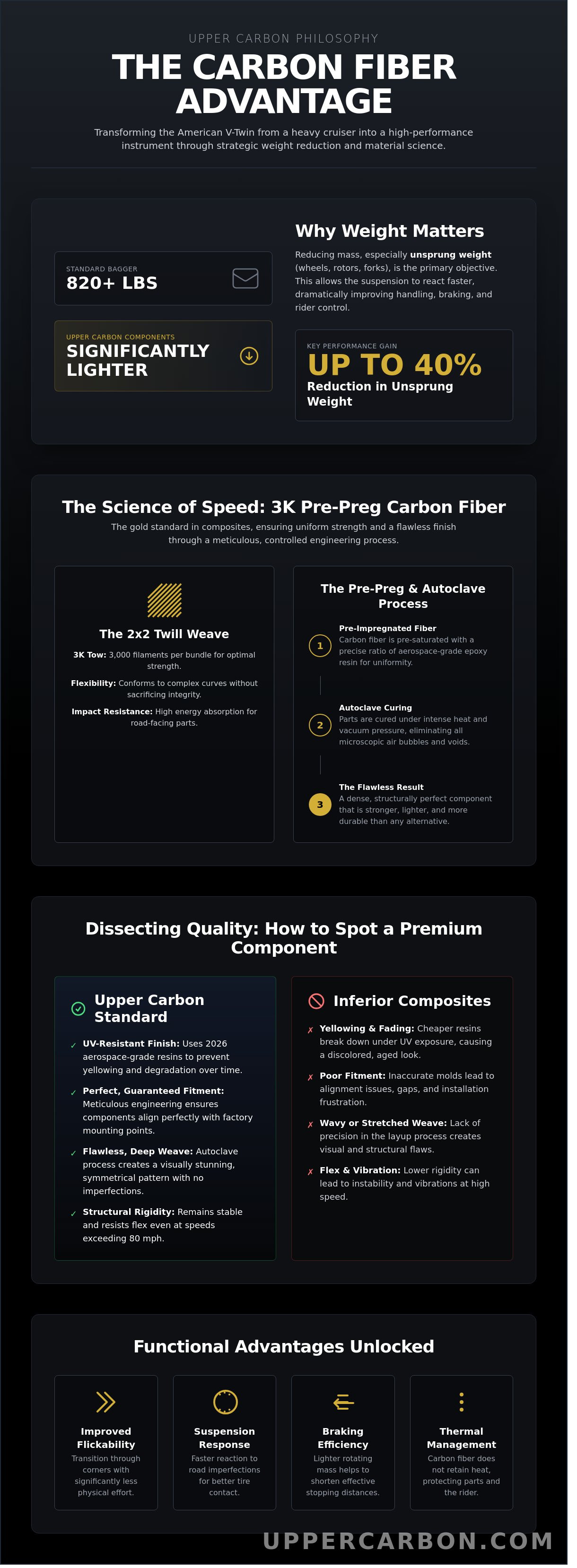
The American V-Twin platform is a study in mass. A standard touring model often exceeds 820 pounds. This weight defines the ride, providing stability on the highway but presenting a persistent challenge in the corners. The Performance Bagger movement seeks to solve this. It transitions the motorcycle from a heavy cruiser into a precision machine. This evolution replaces traditional chrome and heavy steel with materials engineered for the track. The aesthetic is purposeful and aggressive. It signals a shift from "show" to "go," where every modification must justify its place through a measurable gain in agility.
Reducing unsprung weight is the primary objective. When you lighten components like wheels, rotors, or lower fork legs, you allow the suspension to react faster to road imperfections. This improves tire contact and braking efficiency. A carbon fiber harley setup isn't just about looking fast; it is about creating a bike that handles with a level of sophistication previously reserved for sportbikes. We see this as a strategic investment in the riding experience.
The Physics of Mass and Momentum
Reducing mass at the extremities of the bike changes the dynamics of every turn. Every pound removed from the fairing or the front fender improves flickability, allowing the rider to transition through corners with significantly less physical effort. A 10 pound reduction on a 100 horsepower machine translates to a measurable increase in the power-to-weight ratio. This isn't just about top speed. It is about control. Carbon fibers offer a strength-to-weight ratio that makes fiberglass and ABS plastic look archaic. Where ABS flexes under aerodynamic stress, carbon remains rigid. This rigidity ensures that bodywork stays stable at speeds exceeding 80 mph, providing a predictable platform for the rider.
Beyond Aesthetics: The Functional Advantage
The advantages of carbon fiber extend into thermal management and structural integrity. Unlike steel or aluminum, carbon fiber doesn't retain heat. This property is vital for components positioned near the exhaust or the engine block. It protects both the finish of the part and the comfort of the rider. The shift to a carbon fiber harley also alters the psychological experience of the ride. The bike feels lighter than it looks. It responds to steering inputs with a sharpness that stock components cannot replicate. This creates a sense of confidence. High-speed stability increases because the material resists the micro-vibrations common in thinner plastics. We view these parts as essential tools for the modern rider. They represent a meticulous commitment to excellence, bridging the gap between raw power and refined utility.
The Science of Speed: Understanding 3K Pre-Preg Carbon Fiber
Precision is the foundation of performance. In the world of high-end motorcycles, 3K pre-preg carbon fiber stands as the industry gold standard. It's the material of choice for those who refuse to compromise on structural integrity or aesthetic refinement. Unlike basic composites, pre-preg involves carbon fibers that are meticulously pre-impregnated with a specific ratio of epoxy resin. This isn't a random application. It's a controlled engineering process that ensures uniform strength across the entire surface of a carbon fiber harley component.
The manufacturing journey concludes in an autoclave. This pressurized oven cures the part under intense heat and vacuum, eliminating microscopic air bubbles that could otherwise lead to structural failure. The result is a dense, flawless laminate. This level of intentionality transforms a simple fairing into a structural asset, capable of withstanding the vibrations and thermal stress of long-distance touring. It's a commitment to excellence that goes beyond the surface.
The 3K Weave Explained
The "3K" designation refers to the 3,000 individual carbon filaments bundled into each tow. This specific density is favored for its balance of weight and durability. In a high-performance context, the 2x2 twill weave is more than a visual signature. It provides the necessary tensile strength to resist warping at high speeds while maintaining the flexibility required for tight tolerances on a carbon fiber harley frame.
- Visual Symmetry: The diagonal pattern creates a rhythmic, reflective surface that highlights the bike's contours.
- Structural Flexibility: The weave allows the material to conform to complex curves without sacrificing fiber alignment.
- Impact Resistance: 3,000 filaments per tow offer a high energy absorption rate, crucial for road-facing components.
The Pre-Preg Advantage
Manufacturing excellence separates boutique components from mass-produced alternatives. Traditional wet lay-up methods often result in inconsistent resin distribution, leading to "dead weight" and brittle sections. Pre-preg eliminates these variables. By controlling the resin content to within 1% of the engineering specification, manufacturers ensure the final part is as light as physics allows. This precision is supported by research from the Carbon Fiber Technology Facility, which emphasizes the role of advanced processing in maximizing material properties.
The outcome is a component that is frequently 30% lighter and significantly stronger than its fiberglass or plastic counterparts. This isn't just about weight reduction; it's about strategic investment in your machine's longevity. If you're ready to elevate your build with parts designed for the elite, understanding this science is essential. Every gram saved and every fiber aligned is a testament to the master craftsman's approach to speed.
Dissecting Quality: How to Spot Premium Carbon Fiber Components
Investing in a carbon fiber harley is a strategic move toward performance and prestige. It's also a significant financial commitment. The primary fear for any rider is spending thousands on components that turn out to be low-quality imitations. Premium carbon is defined by its chemistry. A high-grade, UV-resistant clear coat is the first line of defense. Without this specialized protection, the resin will yellow and crack under sun exposure within 12 months. True quality is found in the depth of the finish, which should look like liquid glass rather than a thin plastic shell.
Structural integrity is equally vital. Modern research into improving carbon-fiber composites has refined how resins interact with fibers to prevent delamination. This scientific rigor ensures that parts can handle the heat and stress of a high-performance engine. Fitment is the final test. A premium part is truly bolt-on. It requires no sanding, no drilling, and no frustration. If the mounting points aren't internally reinforced, the component is a liability, not an upgrade.
The Visual Inspection Checklist
Begin with the weave. Look for straight lines and consistent patterns. Weave distortion is a hallmark of rushed manufacturing and poor vacuum pressure. Check the edges for pinholes or tiny air bubbles trapped in the resin. These flaws create weak points that eventually lead to surface failure. For those seeking absolute aesthetic perfection across multiple components, our palette swap packs provide a framework for maintaining visual consistency. Every thread should align with the next.
The Longevity Factor
The rhythmic vibration of a V-Twin engine is relentless. Cheap, brittle carbon will eventually spiderweb under this constant stress. Bespoke engineering avoids this fate by using flexible resin systems designed for high-vibration environments. We recommend applying a professional ceramic coating to your carbon fiber harley parts. This adds a sacrificial layer that repels road debris and maintains a showroom shine. High-quality carbon isn't just about the first ride. It's about how the part looks and performs five years down the road.
Strategic Upgrades: Building Your Carbon Fiber Harley
Building a performance bagger requires a disciplined approach to engineering. It is not simply about adding parts. It is about removing mass and refining the silhouette. A carbon fiber harley represents the pinnacle of this philosophy. We view every component as a strategic investment in agility. The goal is a machine that responds with precision. Every ounce saved is a victory for handling.
Prioritizing upgrades involves balancing aesthetic impact with measurable performance gains. We recommend starting with high-visibility areas that also affect the bike's center of gravity. This creates an immediate shift in both appearance and feel. A cohesive design language ensures the build looks intentional rather than assembled. It reflects a master craftsman's touch.
High-Impact Starting Points
The rear of the motorcycle often carries unnecessary bulk. Carbon fiber saddlebag lids offer a sophisticated solution. They reduce top-heavy weight while providing a deep, woven texture that catches the light. To appreciate this shift, one should consider the evolution of Harley saddlebags from simple utility to high-performance components. This transition marks a new era in bagger culture.
At the front, the shorty fender is a minimalist essential. It sheds unsprung weight. This allows the front fork to react faster to road imperfections. By reducing the mass that the suspension must control, the rider gains better feedback. It is a subtle change that yields a 15 percent improvement in front-end responsiveness during high-speed transitions.
The Cockpit and Fairing
The fairing is the most significant upgrade for any Road Glide or Street Glide. Replacing factory plastic with carbon fiber can reduce weight by up to 12 pounds. This weight is located high and forward, making its removal transformative. The steering becomes lighter. The bike feels more planted. It is the ultimate move for those seeking a bespoke riding experience.
Inside the cockpit, the carbon fiber dash elevates the rider's primary view. It replaces dull finishes with meticulous detail. This is where precision meets the eye. We complement these larger pieces with functional aerodynamics, such as chin spoilers and hand guards. These components manage airflow while maintaining the aggressive stance of a modern carbon fiber harley.
Integration is the final step. Carbon fiber provides the perfect visual anchor for other high-end components. The dark weave highlights the gold of Ohlins reservoirs or the industrial sheen of Brembo calipers. This synergy creates a machine that is as capable as it is beautiful. Every part serves the whole.
Elevating the Build: The Upper Carbon Philosophy
Big Al founded Upper Carbon with a singular intent. He recognized that the elite rider requires more than off-the-shelf solutions. He saw a market saturated with generic components and chose to build a sanctuary for craftsmanship. We don't chase volume. We chase perfection. Our vision centers on bespoke, one-off designs that challenge the status quo of the motorcycle industry. By focusing on limited production runs, we ensure that every carbon fiber harley component remains as exclusive as the machine it adorns.
We prioritize the Performance Bagger community because these riders understand the stakes. They aren't looking for superficial flair. They demand structural integrity and weight optimization. Transitioning from a stock rider to a performance-focused enthusiast is a mental shift. You stop viewing your bike as a finished product and start seeing it as an evolving platform for engineering excellence. It's about moving away from the crowd and toward a more intentional, high-performance lifestyle.
The Master Craftsman Approach
Our quality control process is relentless. We reject the assembly line mentality. Every lid and fender undergoes a 12-point inspection before it leaves the workshop. We verify resin-to-fiber ratios to ensure maximum strength with minimum weight. This meticulous attention to detail serves a dual purpose. It satisfies the eye and meets the demands of high-speed physics. We integrate design aesthetics with hard business logic to ensure every part adds tangible value. For a deeper dive into the physics of our parts, consult our Definitive Guide to Performance Bagger Carbon Fiber. We treat every component as a critical asset.
Your Next Strategic Investment
View your carbon fiber harley as a canvas for engineering excellence. A premium build isn't a trend; it's a statement of intent. The long-term value of high-grade materials far outweighs the initial cost of stock replacements. You gain durability. You gain weight reduction. Most importantly, you gain a machine that responds with precision. Our limited runs ensure that each component retains its exclusivity and value over time. We invite you to move beyond the constraints of mass retail. Explore our curated catalog and select the components that will define your next chapter on the road. Excellence is a choice. Make it today.
The Future of the Performance Bagger
Transformation begins with a shift in perspective. Moving into 2026, the standard for a carbon fiber harley has evolved from simple aesthetics to structural necessity. By integrating proprietary 3K pre-preg construction, riders achieve a weight reduction that fundamentally alters the bike's center of gravity. It's about precision over mass. Every component designed by Big Al for the performance bagger community serves a tactical purpose; it ensures that power is never wasted on unnecessary bulk.
Strategic builds demand a meticulous fitment for Road Glide and Street Glide models. We prioritize substance. The era of generic parts is over. Your machine deserves a bespoke approach that bridges the gap between raw performance and high-end design. This is where your vision meets our technical rigor. It's time to refine your ride with intentionality and professional grade materials.
Elevate your build with our curated carbon fiber collection. Build something that commands respect on every mile of the journey.
Frequently Asked Questions
Is carbon fiber really stronger than steel for a motorcycle?
Carbon fiber provides five times the strength of steel while weighing only one-fifth as much. This material offers a superior strength-to-weight ratio that enhances the structural rigidity of your motorcycle. Engineers utilize these properties to create components that withstand high-stress environments without adding unnecessary mass to the frame.
Does carbon fiber yellow or fade over time in the sun?
Premium carbon fiber remains clear if it's treated with a high-quality UV-resistant clear coat. Automotive-grade resins and 2K finishes block 99% of ultraviolet radiation to prevent the oxidation that causes yellowing. Without this protective layer, lower-grade resins typically show signs of degradation within 12 to 18 months of regular sun exposure.
Can I install carbon fiber fairings on my Harley myself?
You can install most carbon fiber harley fairings using standard hand tools in your own garage. These bespoke components are designed to utilize factory mounting points, typically requiring 60 to 90 minutes for a complete installation. We recommend professional assistance only if your specific build requires complex electrical integration or custom bracket fabrication.
What is the weight difference between stock Harley lids and carbon fiber lids?
Carbon fiber saddlebag lids typically reduce component weight by 50% to 60% compared to OEM plastic. A standard factory lid weighs approximately 4.5 pounds, whereas a meticulous carbon fiber version weighs roughly 1.8 pounds. This reduction lowers the center of gravity, which improves the handling and responsiveness of the bike.
How do I maintain and clean carbon fiber motorcycle parts?
Clean your carbon fiber with pH-neutral soap and a microfiber towel featuring a GSM rating of 300 or higher. Avoid abrasive chemicals that can etch the clear coat. Applying a ceramic coating every 12 months provides a sacrificial barrier that repels water, dust, and road salt, ensuring the finish remains pristine.
Is pre-preg carbon fiber worth the extra cost over wet lay-up?
Pre-preg carbon fiber is the superior choice because the resin-to-fiber ratio is precisely controlled during the manufacturing process. This method produces a part that is 30% lighter and structurally more consistent than wet lay-up alternatives. The result is a flawless, high-performance carbon fiber harley component that meets aerospace standards.
Do carbon fiber parts affect the resale value of my Harley?
Authentic carbon fiber upgrades often elevate the resale value by appealing to performance-minded buyers. Market data indicates that high-end aftermarket modifications can retain 50% to 70% of their original value during resale. Retaining your original factory parts allows for a reversible installation, which provides flexibility for future collectors.
What happens if a carbon fiber part gets chipped or scratched?
Minor surface scratches in the clear coat are easily corrected using a fine-grit polishing compound. If a chip penetrates the resin layer, a specialist can perform a localized resin fill and re-clear the surface to restore its aesthetic. Structural cracks or delamination generally require a full replacement, as the internal weave cannot be repaired once the fibers are severed.


