

Last Updated: October 25, 2026
Quick Summary
The best suspension upgrades for bagger racing start with Performance Bagger 16-Inch Racing Shocks at $1,495.00, which raise ride height to unlock lean angle and cornering clearance. Follow with a 49mm Touring Fork Brace at $295.00, Death Deleter steering stabilizers from $425.00, the CVORR Performance Swingarm at $3,500.00, and matched fork springs and cartridges.
- Rear ride height comes first, then fork brace, springs and cartridges, then preload and damping tuning.
- The 49mm Touring Fork Brace fits 2014-up Touring models with stock 49mm forks and bolts straight on.
- Death Deleter kits fit 2015-2026 Road Glide and CVO models, but cow bells must be removed for installation.
- The CVORR swingarm is CNC cut from 6061 T6 aluminum with three shock positions for geometry tuning.
- Set preload first, then rebound, then compression, and log baseline settings before every session.
Table of Contents
- Why Bagger Racing Suspension Setup Decides Races
- 1. Performance Bagger 16-Inch Racing Shocks
- 2. Performance Bagger 49mm Touring Fork Brace
- 3. Death Deleter Steering Stabilizer Kits
- 4. Bagger Boy CVORR Performance Swingarm
- 5. Performance Bagger Fork Upgrades: Springs and Cartridges
- Harley-Davidson Bagger Rear Shocks: What to Look For
- Öhlins vs. Legends Suspension: How to Choose
- Frequently Asked Questions
Why Bagger Racing Suspension Setup Decides Races
Bagger racing rewards riders who treat suspension as a system, not a shopping list. A bagger that wallows mid-corner or chatters over seams will lose time no engine build can recover. At Fat Boy Design USA, our own race team validates every part we sell. Below, we rank the five best suspension upgrades for bagger racing, from rear shocks to fork bracing, with the setup logic that ties them together.
The core problem is weight and geometry. A touring motorcycle carries more mass than a sportbike, sits lower, and runs out of cornering clearance early. Stock suspension is tuned for comfort, not lap times. The fix is a package: ride height, damping control, and front-end rigidity working together.
A common mistake is buying one part and expecting a transformation. Suspension is a chain. Here is the upgrade order we recommend, and why each link matters.
1. Performance Bagger 16-Inch Racing Shocks
The single biggest gain in bagger racing comes from the rear. Our Performance Bagger 16-Inch Racing Shocks raise ride height to unlock lean angle, cutting hard-part contact and building cornering confidence. Priced at $1,495.00, they were developed and validated on our own race team, not in a catalog meeting.

Taller shocks change everything downstream. You gain ground clearance, you gain cornering clearance, and you stop dragging the exhaust in every tight turn. The trade-off is a higher center of gravity, which makes precise damping and preload setup non-negotiable.
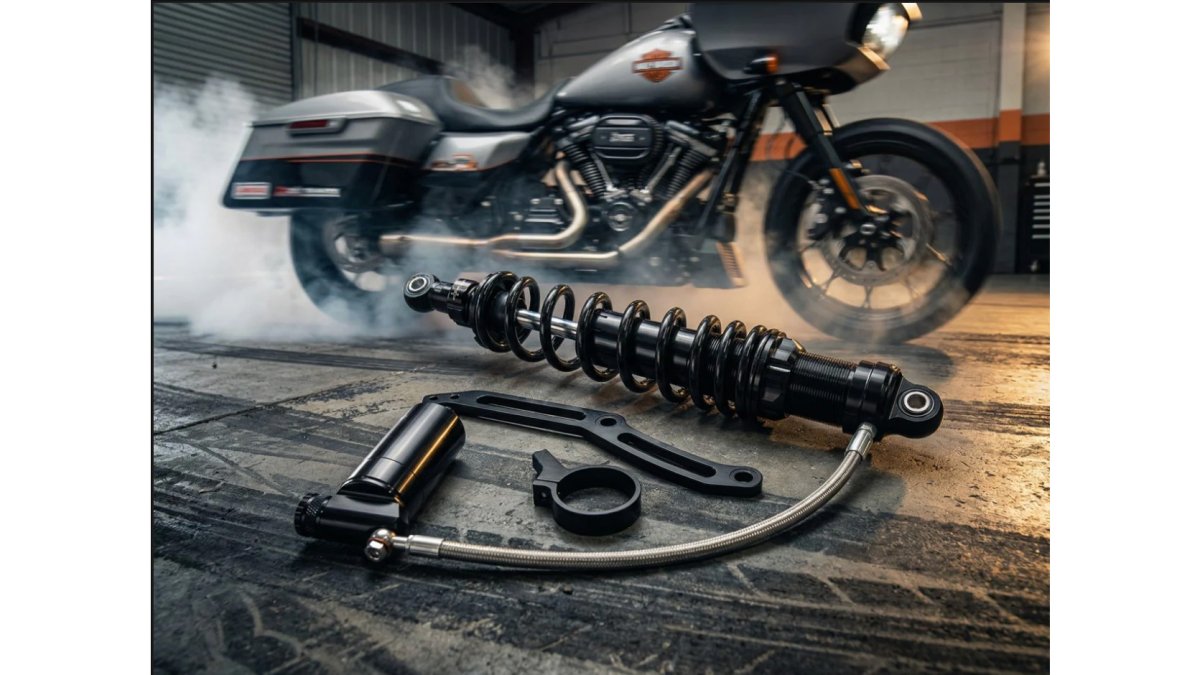
Best for: racers chasing maximum lean angle and reduced hard-part contact. Skip if: you ride mostly two-up touring and prioritize a plush highway ride over track clearance.
2. Performance Bagger 49mm Touring Fork Brace
Front-end flex quietly costs you time. The 49mm Touring Fork Brace is a billet aluminum piece that reinforces the fork tubes on 2014-up Touring models with stock 49mm forks, reducing deflection and twist under hard braking and cornering. It costs $295.00 and bolts straight on.

What most riders miss is how much of the "vague" feeling at the bars is chassis flex, not damping. Brace the fork legs and steering response sharpens immediately. In practice, this is the cheapest handling upgrade on this list and one of the most felt.
3. Death Deleter Steering Stabilizer Kits
High-speed instability is the bagger racer's oldest enemy. The Death Deleter line attacks it directly. The Road Glide and CVO kit fits 2015-2026 models across 49mm to 62mm inverted front ends and starts at $425.00, with an optional 75mm YSS damper. A Street Glide-specific version is also available.

We designed the bracket system in-house after testing on street and race bikes. It controls front-end wobble and adds confidence at speed. Watch out: the cow bells must be removed for installation, so plan for that before race day.
4. Bagger Boy CVORR Performance Swingarm
Chassis control at the rear is where serious builds separate. The Bagger Boy CVORR Performance Swingarm is CNC cut from a single block of 6061 T6 aluminum, with three shock positions, an axle with chain tensioner, and stand spools for track use. It runs $3,500.00 as a limited pre-sale item.
Three shock positions give you real geometry tuning: raise or lower the rear to balance front and rear ride height. That adjustability is what lets you dial the bike for different track conditions rather than accepting one compromise setup.
5. Performance Bagger Fork Upgrades: Springs and Cartridges
Springs and cartridges finish the front end. Heavier-rated fork springs matched to rider weight and passenger load stop the front from diving under braking, while a cartridge kit adds proper compression and rebound damping. Pair these with the fork brace and you have a front end that holds a line.
Performance Bagger 16" Inch Racing Shocks →
Fitment matters here. Spring rate should be chosen for your actual rider weight plus luggage load, not a generic average. Get the rate wrong and no amount of damping adjustment will fix it.
Harley-Davidson Bagger Rear Shocks: What to Look For
When comparing Harley-Davidson bagger rear shocks for racing, the spec sheet tells you less than the setup sheet. Four criteria separate a shock that survives a race weekend from one that fades by lap five: ride height gain, adjustability range, damping quality under heat, and service life. Here is how each one actually plays out on track, plus the baseline numbers to start from.
- Ride height: Every additional inch of shock length translates roughly to additional lean angle before hard parts touch. That is why a 16-inch racing shock is the first upgrade on this list, not the last. Measure static and race sag before and after the swap so you know exactly how much clearance you bought.
- Adjustability: Hand-adjustable preload lets you compensate for rider weight and fuel load between sessions without tools. Separate compression and rebound circuits let you fix a specific problem, a shock that packs down over repeated bumps needs more rebound, not more spring. A shock with only one adjuster forces you to compromise.
- Reservoir design: A remote reservoir adds oil volume and surface area, which slows heat buildup over a long session. On a heavy bagger, shock oil temperature climbs fast; a reservoir keeps damping consistent instead of going soft in the final laps.
- Service interval: Race use shortens shock oil life dramatically compared with street miles. Factor a rebuild into your season budget and ask the manufacturer for a race-duty service interval before you buy.
Baseline Setup Numbers to Start From
Set preload first, then rebound, then compression, in that order. Changing spring preload after you have dialed damping throws off every setting downstream.
Front-to-Rear Balance and Upgrade Order
Rear shocks and front fork work as a pair. If you raise the rear without addressing the front, you shift weight bias forward and the fork dives harder under braking. The practical sequence for incremental builders is: rear ride height first, fork brace second, springs and cartridges third, then fine-tune preload and damping front to rear as a matched set. Racers who upgrade the rear and stop there usually report a nervous front end, that is the imbalance talking, not a bad shock.
For riders still weighing options, our full bagger racing parts collection lets you compare shock and chassis components side by side.
| Upgrade | Price | Primary Gain | Install Effort |
|---|---|---|---|
| 16-Inch Racing Shocks | $1,495.00 | Lean angle, cornering clearance | Moderate |
| 49mm Fork Brace | $295.00 | Front-end rigidity, steering feel | Low |
| Death Deleter Stabilizer | $425.00 | High-speed stability | Moderate |
| CVORR Swingarm | $3,500.00 | Rear geometry adjustability | High |
| Fork Springs and Cartridges | Varies | Braking stability, damping control | Moderate |
Öhlins vs. Legends Suspension: How to Choose
Legends options tend to favor a simpler setup that works well out of the box, with fewer adjustments to get wrong. For a racer who wants to bolt on, set sag, and ride, that simplicity is a genuine performance advantage because it removes a variable.
Race-Class Compatibility Comes First
Before you compare brands, check your class rulebook. Some racing classes restrict suspension modifications, specify maximum ride height changes, or require stock mounting points. A premium shock that violates a technical requirement is a disqualification, not an upgrade. Confirm permitted modifications with your sanctioning body before you spend a dollar.
Total Installed Cost and Value
Compare parts, installation, and setup costs together, not sticker price alone. A shock that needs a custom mount or a revalve to work with your swingarm carries hidden cost. Ask each manufacturer for the installed height, spring rate options, and recommended service interval so you can calculate cost per race weekend rather than cost per part.
Whichever brand you choose, treat the purchase as the start of a setup process, not the end of a shopping decision.
Frequently Asked Questions
What is the best suspension upgrade for bagger racing?
The single highest-value change is usually the rear shocks, because ride height and spring rate control cornering clearance and how the bike puts power down. A 16-inch racing shock raises ride height for more lean angle and reduces hard-part contact. Pair it with a fork brace or steering stabilizer for front-end stability, then add fork springs or cartridges once the rear is dialed in.
Should I upgrade the front forks or rear shocks first on a bagger?
Start at the rear. Rear shocks set ride height, cornering clearance and weight transfer under acceleration, and they carry the passenger and luggage load. Once the rear is sorted, address the front with a fork brace, springs or a cartridge kit so the two ends work together. Doing the front first often leaves the bike unbalanced and makes setup harder to read on track.
What's better for a bagger, Öhlins or Legends suspension?
Both are established names, and the right pick depends on your class rules, budget and how much adjustability you need. Öhlins and Legends offer different spring rates, damping adjustment ranges and service intervals, so compare those specs against your race class and rider weight rather than brand reputation alone. Fitment for your specific model year matters as much as the badge on the shock.
How do you set sag on a bagger for racing?
Measure rear sag with the bike loaded as it races: rider in gear, plus any ballast or luggage the class allows. Set preload so the rear settles into the target range for your shock, then check front sag the same way. Recheck after any spring change or swingarm swap, because ride height and shock position affect the numbers.
How does suspension setup affect bagger cornering and stability?
Ride height, spring rate and damping decide how much lean angle you get before hard parts touch, how quickly the bike transitions, and whether the front stays planted at speed. Too little preload and the bike wallows; too much and it skates. A steering stabilizer and fork brace add structural control, but they work best on top of correct spring and damping settings.


