

Table of Contents
- What Unsprung Weight Means and Why It Matters
- How Wheels and Tires Contribute to Unsprung Mass
- Effects on Acceleration and Rotational Inertia
- Braking Performance and Reduced Unsprung Weight
- Cornering, Grip, and Handling Improvements
- Motorcycle Unsprung Weight Reduction Strategies
- Lightweight Motorcycle Wheels and Tire Selection
- Harley Touring Carbon Fiber Parts for Weight Savings
- Frequently Asked Questions
Last Updated: October 14, 2026
What Unsprung Weight Means and Why It Matters
Unsprung weight refers to any mass on your motorcycle that isn't supported by the suspension system, and efforts to reduce unsprung weight directly improve performance. This includes wheels, tires, brake rotors, calipers, and the lower portions of the fork and swingarm. Understanding unsprung weight is critical because it directly affects how your bike accelerates, brakes, and handles curves.
The significance of reducing unsprung weight lies in physics. Lighter wheels and tires require less energy to accelerate and decelerate. For riders pushing their Harley Touring models in competitive bagger racing or aggressive street riding, this difference translates into measurable gains in lap times, braking distance, and cornering grip.

Sprung vs. Unsprung Weight
Sprung weight is the mass supported by your suspension: the engine, frame, fuel tank, and rider. Unsprung weight sits outside the suspension system entirely. The distinction matters because sprung weight changes are absorbed by springs and dampers.
Consider a typical Road Glide. The frame and engine represent sprung weight. The wheels, tires, and brake components represent unsprung weight. When you hit a pothole, the suspension compresses to manage sprung weight.
This is why professional racers obsess over wheel weight. A one-pound reduction per wheel might seem trivial in isolation.
The Physics Behind Rotational Inertia
Rotational inertia describes the resistance an object has to changes in rotational speed. Wheels experience rotational inertia constantly. When you accelerate, your wheels must spin faster. When you brake, they must slow down.
The mathematical relationship is direct: if you reduce wheel weight by 20 percent, you reduce rotational inertia by approximately 20 percent. This means less engine power is needed to accelerate the wheels, leaving more available for forward motion.
For Harley Touring models, this effect compounds. A Road Glide or CVO already carries significant mass. Reducing unsprung weight through lightweight wheels and carbon fiber components amplifies the performance benefit because you're working with a heavier baseline.
How Wheels and Tires Contribute to Unsprung Mass
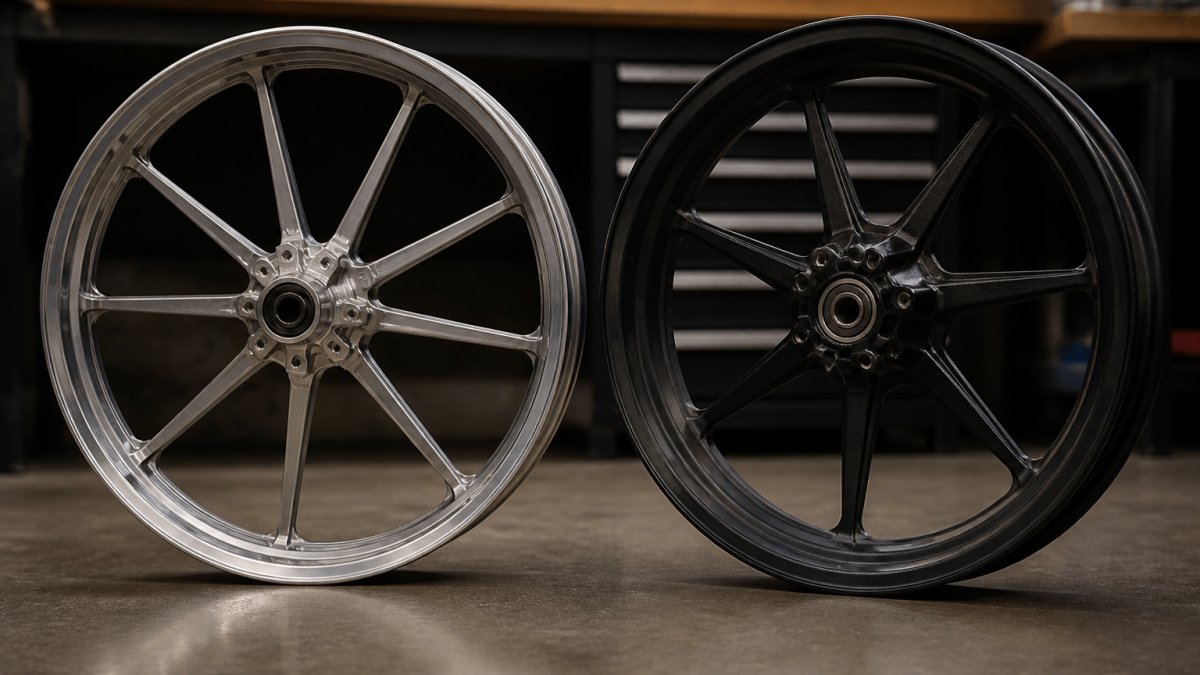
Wheels and tires represent the largest opportunity for unsprung weight reduction on any motorcycle. A typical Harley Touring wheel-and-tire assembly weighs between 45 and 55 pounds per corner.
Stock Harley wheels use traditional spoke or cast designs. They're engineered for durability and cost, not minimum weight.
The cumulative effect is significant. Reducing wheel-and-tire weight by 20 pounds total across all four corners directly improves acceleration response, braking performance, and suspension response.
Effects on Acceleration and Rotational Inertia
Lighter wheels accelerate faster because they demand less rotational energy. This effect is most noticeable in the first few seconds of acceleration when engine torque is at peak levels.
The gain compounds at higher speeds. Rotational inertia becomes more significant as wheel speed increases. At highway speeds, lighter wheels respond faster to throttle inputs and recover more quickly from engine braking.
For competitive bagger racing, acceleration improvements directly impact race outcomes. Lighter wheels mean quicker launches off the line and faster mid-range acceleration through technical courses. Riders competing in bagger racing report that wheel weight is a significant factor influencing performance, alongside suspension tuning and rider skill.
Braking Performance and Reduced Unsprung Weight
Braking benefits from reduced unsprung weight through two mechanisms: reduced rotational inertia and improved suspension control. Lighter wheels require less brake force to achieve the same deceleration rate.
When wheels are lighter, your suspension compresses more evenly during hard braking. The bike remains more stable, and the front tire maintains consistent contact with the road surface.
Brake rotor upgrades also contribute to unsprung weight reduction. Two-piece rotors with aluminum carriers weigh less than solid steel rotors while maintaining thermal performance. For Harley Touring models, switching to lightweight rotors and carbon-ceramic pads can save weight per wheel without sacrificing stopping power.
Cornering, Grip, and Handling Improvements
Lighter unsprung weight directly improves cornering performance through faster suspension response and better tire contact. When you lean into a corner, the suspension compresses on the outside and extends on the inside.
This is particularly important on a Harley Touring model, which carries considerable mass high on the bike. The weight distribution challenges make suspension response critical. Reducing unsprung mass helps the suspension manage the sprung weight more effectively, resulting in sharper turn-in and more stable mid-corner behavior.
Grip improvements emerge from better tire contact. Lighter wheels allow the suspension to track road surface variations more precisely. On rough pavement or during aggressive cornering, this translates into more consistent traction.
Motorcycle Unsprung Weight Reduction Strategies
The most effective approach to reducing unsprung weight involves a tiered strategy based on budget and performance goals. Start with wheels and tires, which offer the largest weight savings relative to cost. Progress to brake component upgrades, then suspension refinements.
Brake Rotor and Caliper Upgrades
Brake rotors present an accessible weight-reduction opportunity. Stock Harley rotors use solid steel construction. Two-piece rotors with aluminum carriers reduce weight while improving heat dissipation. The performance benefit is modest compared to wheel upgrades, but the cost is lower, making this an efficient first step for budget-conscious riders.
Caliper weight matters less than rotor weight from a physics perspective, but lightweight forged calipers do contribute to overall unsprung mass reduction. The combined savings from lighter rotors and calipers can contribute to overall weight reduction, depending on how many wheels you upgrade.
Suspension Component Optimization
Suspension forks and swingarms contain unsprung mass that's harder to address than wheels. Lower fork legs can be upgraded to lighter materials, and swingarm bracing can be optimized, but these modifications often require professional installation and may impact warranty coverage.
Harley Carbon Fiber Racer Front Fender →
A more practical approach is ensuring your suspension components are properly maintained and tuned. A well-functioning suspension with correct spring rates and damping performs better than a heavy suspension that's out of adjustment. For most riders, optimizing existing suspension is more cost-effective than replacing components.
Lightweight Motorcycle Wheels and Tire Selection
Wheel selection is the single most impactful unsprung weight reduction decision. The choice between aluminum, magnesium, and carbon fiber involves trade-offs between weight, cost, durability, and aesthetics.

Aluminum vs. Magnesium vs. Carbon Fiber Wheels
Aluminum wheels are the industry standard for Harley Touring models. They're durable, affordable, and offer reasonable weight savings over stock options. Forged aluminum wheels weigh less than cast versions while maintaining superior strength.
Magnesium wheels are lighter than aluminum. However, magnesium requires more aggressive corrosion protection and is more expensive. For street riding, aluminum offers good long-term value.
Carbon fiber wheels represent a significant weight reduction option. For competitive racing, this weight savings justifies the premium price. For street riding, the cost-to-benefit ratio is a consideration.
Tire Weight and Rolling Resistance
Tire selection involves balancing weight against grip and longevity. Racing tires weigh less than street tires because they use softer compounds and thinner sidewalls. However, racing tires wear quickly and don't perform well in wet conditions.
A practical compromise is selecting a performance street tire in the smallest width that maintains adequate grip for your riding style. Narrower tires weigh less and reduce rolling resistance, improving fuel efficiency alongside performance gains.
Harley Touring Carbon Fiber Parts for Weight Savings
Carbon fiber components offer the most dramatic visual transformation alongside meaningful weight reduction. Fat Boy Design USA specializes in track-tested carbon fiber parts engineered specifically for Harley Davidson Touring models.
The advantage of our carbon fiber components is direct bolt-on installation. Unlike some aftermarket parts, our designs ensure perfect OEM fit with zero modifications required. This means you upgrade your bike without compromising structural integrity or resale value.
Carbon Fiber Fenders and Body Components
Carbon fiber fenders deliver substantial weight savings. A front fender upgrade saves 3 to 5 pounds depending on the design. Rear fenders and side covers add another 2 to 4 pounds in savings.
Our Platinum Series components are in-house designed specifically for Touring models. The Upper Carbon Platinum Series Racer Front Fender at $750.00 improves aerodynamics while delivering race-inspired aesthetics.

Riders on Road Glide, CVO, and Low Rider ST models benefit from the improved suspension response that carbon fiber upgrades provide. Reducing unsprung weight through body panels allows your suspension to work more effectively, resulting in sharper cornering and better stability at highway speeds.
Direct Bolt-On Installation and OEM Fitment
The defining characteristic of our carbon fiber components is the commitment to OEM fitment. We understand that riders want upgrades that enhance their bikes without requiring modifications or custom work.
This approach preserves your bike's structural integrity and ensures that future service work isn't complicated by custom modifications. Our track-tested components have proven themselves in competitive bagger racing environments, where reliability and precise fitment are non-negotiable.
The Low Rider ST Carbon Fiber Front Fender at $430.00 represents an accessible entry point for riders looking to reduce unsprung weight without premium pricing.
Reducing unsprung weight is one of the most effective performance upgrades available to Harley Touring owners.
Frequently Asked Questions
What is considered unsprung weight on a motorcycle?
Unsprung weight includes all components not supported by the suspension: wheels, tires, brakes, brake rotors, and the lower portions of forks and shock absorbers. On a Harley Touring bike, this typically accounts for 80-120 pounds per corner depending on wheel size and brake setup. Reducing unsprung weight directly improves how quickly your suspension responds to road surface changes.
How does reducing unsprung weight affect acceleration?
Lighter wheels and tires require less rotational energy to spin, reducing the work your engine must perform. A reduction in wheel weight can improve acceleration noticeably, especially from a standstill. The effect compounds when combined with lighter brake rotors and suspension components, making your bike feel snappier off the line and more responsive throughout the rev range.
Can lighter wheels improve cornering and suspension response?
Yes. Lighter wheels reduce gyroscopic forces and allow your suspension to react faster to bumps and lean inputs. This translates to sharper cornering, better grip during direction changes, and improved tire contact with the road surface. For Harley Touring baggers in competitive racing, this improvement in handling responsiveness is often more noticeable than acceleration gains.
What parts of a Harley Touring bike contribute most to unsprung weight?
The wheel-and-tire assembly is the largest contributor, followed by brake rotors and calipers. Carbon fiber fenders, like those from Fat Boy Design USA, remove weight from the unsprung category indirectly by reducing overall bike mass. For example, the Low Rider ST Carbon Fiber Front Fender at $430 or Harley Touring models starting at $510 replace heavier OEM plastic and steel components with lightweight 3K prepreg carbon fiber.
How much unsprung weight can you realistically remove from a Harley Touring bike?
A realistic goal is to achieve significant weight reduction depending on your upgrade path. Lightweight wheels, carbon fiber fenders, and lighter brake rotors all contribute to weight savings. Fat Boy Design USA's carbon fiber Touring components, engineered with 100% real 3K pre-preg carbon fiber and UV-resistant ceramic clear coat, deliver measurable weight savings with direct bolt-on fitment and no modifications required.
Are carbon fiber parts lighter than stock Harley parts?
Yes. Carbon fiber is lighter than the aluminum and plastic used in OEM Harley components while maintaining superior strength. Fat Boy Design USA's carbon fiber parts are manufactured from premium 3K prepreg dry carbon fiber, delivering excellent strength-to-weight ratios. The ceramic clear coat provides UV resistance and durability, ensuring your weight savings don't fade over time.
Does reducing unsprung weight improve ride quality?
Lighter unsprung components allow your suspension to maintain better tire contact with the road, which can improve comfort on smooth surfaces. However, if you reduce unsprung weight without adjusting suspension tuning, ride quality may feel slightly harsher on rough roads. The key is balancing weight reduction with proper suspension setup for your specific riding style and road conditions.
What should you consider before replacing motorcycle parts to reduce weight?
Prioritize unsprung components: wheels, tires, and brakes deliver the most noticeable performance gains. Verify fitment for your specific model and year, Fat Boy Design USA's direct bolt-on components ensure OEM fit with no modifications. Consider your riding style: competitive racers benefit most from aggressive unsprung weight reduction, while street riders should balance performance with durability and comfort.


