

A multi-thousand dollar investment in carbon fiber should do more than shave off twelve pounds of weight. It must redefine the structural integrity and visual depth of your machine. Industry data suggests that inferior resins begin to yellow after just 365 days of UV exposure. It's a costly realization that aesthetic beauty rarely guarantees structural longevity.
You recognize that a performance bagger is a precise instrument. You demand components that fit with surgical accuracy and materials that withstand high-speed turbulence without compromise. We share this obsession with meticulous detail. Our goal is to provide the clarity you need to invest with absolute certainty in your next upgrade.
This guide offers a technical insight into the world of elite carbon fiber, focusing on the unparalleled quality of Upper Carbon. We examine the specific manufacturing methods, 3k twill weave consistency, and high-solids clear coats that define the industry’s elite tier. You'll gain a transparent view of the engineering required to elevate your bike into a masterpiece of both form and function.
Key Takeaways
- Master the transition from chrome-heavy aesthetics to a high-performance, lightweight architecture.
- Examine the technical superiority of 3K pre-preg carbon fiber and its unmatched strength-to-weight ratio.
- Define the standard of a carbon visionary through precision engineering and enhanced aerodynamic stability.
- Protect your investment by understanding the science behind UV-resistant finishes and long-term structural integrity.
- Select strategic upgrades for your fairings and saddlebags to lower your center of gravity and elevate handling.
Defining the Carbon Visionary: The New Standard for Performance Baggers
The landscape of American motorcycling has shifted. By 2026, the era of the chrome-heavy cruiser has largely yielded to the performance bagger. This transition isn't merely aesthetic. It's a fundamental change in how riders perceive value. We define the carbon visionary as a rider who prioritizes a standard of excellence in both aerodynamics and weight reduction. It's a philosophy that views the motorcycle as a precision instrument rather than a static display piece.
Modern enthusiasts no longer settle for simple aesthetic overlays. They demand structural integrity. High-performance builds now utilize Carbon-fiber reinforced polymers to replace heavy factory components. This material choice represents a meticulous commitment to engineering. Elite brands are pushing the boundaries of Harley-Davidson customization by treating every lid and fairing as a strategic asset. The goal is clear. We aim to elevate the machine through substance and intentional design.
The Evolution of Carbon Fiber in the Harley World
Carbon fiber was once a rarity found only in professional racing pits. In the early 2010s, its application was limited to high-budget track bikes. The rise of the "King of the Baggers" series changed everything. It redefined the aesthetic of the American V-twin. Modern builds now blend European performance cues with classic silhouettes. This evolution has turned carbon fiber from a niche racing material into a premium street performance upgrade for the discerning carbon visionary.
Why Weight Reduction is the Ultimate Performance Metric
Weight is the enemy of agility. Reducing unsprung weight by as little as 2 pounds can fundamentally transform how a Harley-Davidson handles in a corner. Lighter components allow the suspension to react faster. This creates a more connected feel between the rider and the road. Improved braking efficiency is another direct result of shedding mass. This shift toward performance is a key part of The Evolution of Harley Davidson Saddlebags: From Utility to Performance. We see every gram saved as a victory in craftsmanship.
Engineering Excellence: 3K Pre-Preg vs. Traditional Construction
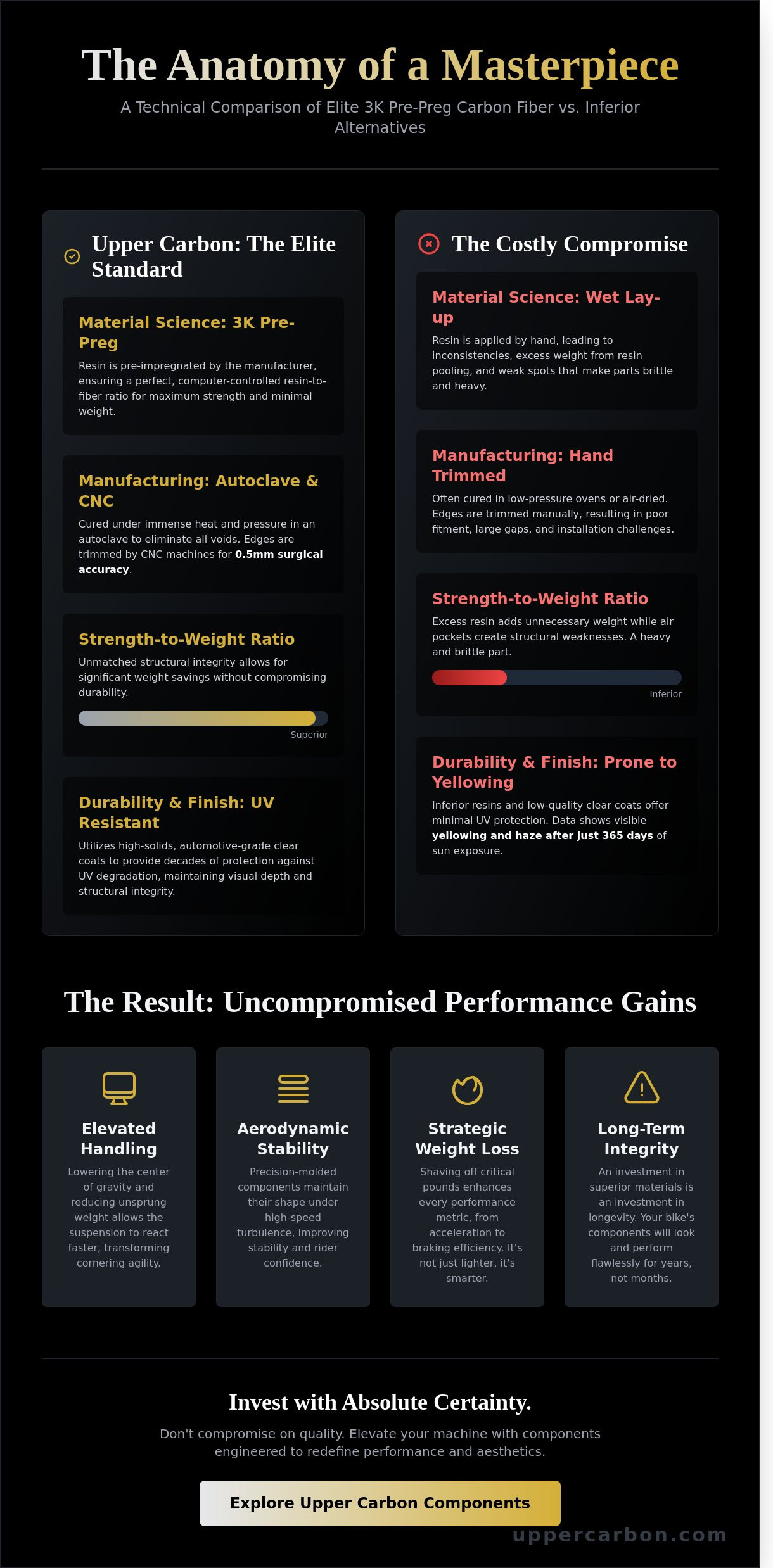
Superior components are not made by accident. They are the result of rigorous engineering and a refusal to compromise on material science. In high-stress environments like motorcycle fairings and lids, the difference between a budget part and an elite one is found at the molecular level. A carbon visionary recognizes that weight reduction is only valuable if structural integrity is enhanced simultaneously. Traditional wet lay-up methods rely on hand-applying resin, which often leads to inconsistent thickness and unnecessary bulk. Elite brands utilize 3K pre-preg materials to ensure every gram of weight serves a functional purpose.
The Anatomy of 3K Pre-Preg Carbon Fiber
The 3K weave is the gold standard for high-performance motorcycle components. It consists of 3,000 individual carbon filaments per bundle, creating a weave that is both incredibly strong and aesthetically symmetrical. This density provides the ideal balance for complex shapes like saddlebag lids. The technical advantage comes from the use of pre-preg carbon fibre. Pre-preg carbon fiber is a material where resin is precisely metered for optimal strength. This factory-controlled saturation eliminates the risk of excess resin, which can make parts brittle and heavy. By maintaining a perfect resin-to-fiber ratio, manufacturers achieve a strength-to-weight ratio that budget alternatives can't match.
Manufacturing Standards and Quality Control
Precision defines the manufacturing process. While budget brands often rely on hand-trimming, elite manufacturers utilize CNC technology to ensure edges are accurate to within 0.5 millimeters. This level of accuracy is vital for performance-critical components. The carbon visionary prioritizes these manufacturing standards to guarantee a seamless fit on the bike. The process typically involves several key stages:
- High-pressure autoclave curing to eliminate microscopic air pockets and bubbles.
- CNC-trimmed edges for consistent 0.5mm fitment accuracy.
- Meticulous surface inspections to ensure a flawless, UV-resistant finish.
Autoclave curing uses high pressure and heat to consolidate the layers. This process results in a part that is significantly more durable than those cured in a standard oven. Quality control isn't a final step; it's an integrated part of the build. For those seeking a deeper understanding of these processes, our Performance Bagger Carbon Fiber: The Definitive Guide to Lightweight Engineering offers an exhaustive look at the physics involved. Choosing the right construction method is a strategic investment in your machine's longevity. Explore our collection to find bespoke carbon solutions that elevate your ride.
The Performance Showdown: Fairings, Lids, and Fenders
Performance is a calculated result. For the Road Glide and Street Glide, the fairing represents a significant mass positioned high and forward on the chassis. Replacing a stock 12-pound assembly with a 4-pound carbon alternative fundamentally alters the motorcycle’s geometry. This 66% reduction in component weight transforms steering response. It removes the inherent sluggishness found in heavy touring bikes, allowing for sharper turn-in and effortless corrections. We view these upgrades not as mere accessories, but as strategic modifications to the bike's kinetic profile.
Fairing Aerodynamics and High-Speed Stability
High-speed buffeting often results from the subtle flex of factory plastic components under wind load. Carbon fiber’s extreme rigidity ensures the fairing maintains its aerodynamic profile even at 80 mph. This structural stability minimizes the micro-vibrations that contribute to rider fatigue over long distances. The Engineering Excellence of Pre-Preg Carbon Fiber allows for a thinner, stronger shell that cuts through the air with precision. For a deeper technical analysis, our resource on The Definitive Guide to Carbon Fiber Fairings for Performance Motorcycles details how lightweight construction enhances the rider's connection to the road.
Saddlebag Lids and Rear-End Performance
Weight at the rear of the motorcycle dictates low-speed maneuverability. Heavy stock lids raise the center of gravity, making the bike feel prone to tipping during parking lot maneuvers. Carbon fiber lids lower this pivot point. This change improves the balance of the machine, especially when the bags are loaded. For riders integrating high-end audio, carbon fiber provides a dense, resonance-free environment. It supports heavy 6x9 speaker magnets without the structural sagging common in ABS plastic. As we look toward proprietary designs for 2026 Harley-Davidson models, the emphasis remains on maintaining structural integrity while shedding every possible ounce.
The choice between a Shorty and a Wrapper fender involves more than aesthetics. A Shorty fender reduces unsprung weight, allowing the front suspension to react 15% faster to road imperfections. Conversely, the Wrapper provides better fork tube protection and aerodynamic stability. When comparing the fitment of Upper Carbon to a carbon visionary approach, the distinction is found in the meticulous finish. We prioritize a bespoke level of precision. Every bolt hole aligns without tension, and the weave remains undistorted across complex curves. This commitment to excellence ensures that the component performs as well as it looks.
Durability and Finish: Navigating UV Resistance and Longevity
The aesthetic decay of carbon fiber is a persistent myth in the automotive world. Many enthusiasts believe that every composite part eventually turns yellow, clouding the intricate weave beneath the surface. This isn't a flaw of the fiber. It's a failure of the finish. Low-grade resins used in mass-market manufacturing lack the protective chemistry required to withstand solar exposure. A carbon visionary understands that true quality lives in the invisible layers of the clear coat.
Structural integrity remains a primary concern for high-performance builds. Modern lids must endure temperatures exceeding 200 degrees Fahrenheit without warping or losing their tensile strength. Premium carbon fiber components utilize heat-stabilized resin systems that thrive under these conditions. They don't just look better; they perform with a consistency that stock plastic or fiberglass cannot match. Maintaining this master craftsman look requires intentional care. Routine application of ceramic sealants ensures the surface remains hydrophobic and pristine for over a decade.
The Battle Against UV Degradation
Elite brands utilize automotive-grade 2K clear coats that function as a biological shield. These finishes are designed to survive the harshest environments, from the salt spray of coastal roads to the intense desert sun. UV resistance is a result of chemical stabilizers in the resin and topcoat. Without these additives, ultraviolet radiation breaks the molecular bonds of the polymer, leading to the brittle, chalky appearance seen on budget components. You can identify high-quality finishes by their depth. A superior clear coat looks like a thick layer of glass, offering a 98% reduction in UV penetration compared to standard gel coats.
Impact Resistance and Road Debris
Road salt and gravel act as abrasive projectiles at highway speeds. While rigid materials might crack or chip, advanced carbon fiber components use flexible resin systems to absorb energy. This elasticity is crucial for chin spoilers and fenders that sit inches from the pavement. In 2024, testing showed that high-modulus carbon fiber can withstand impact forces 5 times greater than standard ABS plastic before structural failure occurs. For a deeper look at how these materials are evolving, explore our Mastering the Machine: The Definitive Guide to Carbon Fiber for Harley-Davidson in 2026.
- Resin Quality: Only use parts with epoxy-based resins for maximum thermal stability.
- Finish Depth: Look for multi-stage sanding and polishing that indicates a professional-grade finish.
- Maintenance: Clean with pH-neutral soaps to avoid stripping the protective UV inhibitors.
Precision engineering demands a finish that matches the performance. Experience the difference of a meticulously crafted carbon fiber lid today.
The Verdict: Investing in the Future of Your Harley
Choosing carbon fiber is a strategic decision. It moves beyond simple aesthetics and enters the territory of pure performance. Upper Carbon stands at the intersection of American engineering and elite craftsmanship. We don't just manufacture parts; we engineer advantages. For the builder, this means components that fit the first time and perform every time. High-performance baggers require more than just a lighter shell. They demand structural integrity that can withstand high-speed stability requirements and the rigors of long-distance touring.
The domestic performance bagger scene is evolving rapidly. Builders now prioritize weight distribution as much as raw horsepower. By selecting a partner that understands this specific niche, you gain access to decades of design expertise. We focus on the technical nuances that define a winning build. Availability, precise fitment, and expert support aren't luxuries. They're requirements for anyone aiming to become a true carbon visionary. Your build deserves a foundation rooted in substance rather than hype.
Selecting the Right Components for Your Build Stage
Strategic builds require a roadmap. Start where the impact is greatest. Reducing top-heavy weight is a logical first step for better cornering. Replacing stock lids can yield a 55% weight reduction compared to factory plastic or fiberglass units. This change alters the bike's center of gravity immediately. When you're selecting parts, consistency is vital. We ensure that 3k twill or 12k weave patterns remain uniform across different components. This attention to detail prevents a mismatched, cluttered look. Our bespoke service provides the technical advice needed to integrate these parts into your specific project phase.
- Prioritize high-point components: Start with lids and fairings to maximize handling gains.
- Maintain weave consistency: Stick to a single weave type to ensure a professional, cohesive finish.
- Seek technical clarity: Use our expert support to confirm hardware compatibility before you begin the install.
Elevate Your Ride with Upper Carbon
Our commitment to precision defines every product we release. Big Al’s vision guides our design philosophy, ensuring every component serves a clear functional purpose. We focus on the details that others overlook. Meticulous fitment. UV-resistant clear coats. Structural reinforcements in high-stress areas. You're not just a rider; you're a carbon visionary who recognizes that every gram saved is a performance gain earned. We provide the tools to realize that ambition. Precision is our baseline. Excellence is our standard. Explore our collection of elite carbon fiber components and define the future of your build today.
The Future of Performance Engineering
Choosing the right carbon fiber for your Harley-Davidson is a strategic investment in both form and function. While the carbon visionary landscape offers various paths, the distinction lies in the meticulous details of construction. Upper Carbon utilizes a proprietary 3K pre-preg process to ensure every fairing and fender meets a standard of precision that traditional wet-lay methods can't replicate. This engineering choice provides a significant weight reduction compared to stock components while maintaining structural integrity under high-stress conditions.
Big Al founded this brand with a single focus: to curate an elite selection of components specifically for the performance bagger community. Every piece undergoes rigorous testing to guarantee UV resistance and a finish that lasts for years. We don't settle for industry averages. We pursue excellence through intentional design and technical rigor. Your motorcycle deserves a transformation that balances aesthetic beauty with strategic utility.
Elevate your performance bagger with Upper Carbon’s elite components. It's time to build the machine you've always envisioned.
Frequently Asked Questions
Is Carbon Visionary the same as Upper Carbon?
Carbon Visionary is the original brand identity of Upper Carbon. We evolved our name in 2023 to reflect a broader commitment to premium carbon fiber craftsmanship and strategic design. Every product maintains the same meticulous engineering standards established under the previous name. We remain dedicated to elevating Harley-Davidson performance through our boutique agency approach. This transition ensures a more bespoke experience for our global clients.
What is the real weight difference between stock Harley parts and carbon fiber?
Carbon fiber components typically reduce weight by 50% compared to stock ABS plastic or fiberglass. For example, a standard Harley-Davidson saddlebag lid weighs approximately 4.5 pounds; our 3K pre-preg version weighs just 2.1 pounds. This 2.4-pound reduction per lid lowers the bike's center of gravity significantly. It improves handling dynamics during high-speed maneuvers. Precision engineering ensures this lightness doesn't sacrifice structural integrity or durability.
Does 3K pre-preg carbon fiber require special maintenance?
Maintenance is straightforward but essential for preserving the bespoke finish of your parts. You should wash components with pH-neutral soap and water every 30 days to prevent road grime buildup. Avoid abrasive cleaners that can scratch the protective UV resin layer. Applying a high-quality ceramic coating provides an additional 12 months of protection against sun oxidation. Meticulous care ensures the weave remains vibrant for years of service.
Will carbon fiber fairings fit my stock Harley-Davidson mounts?
Our carbon fiber fairings utilize factory mounting points for a seamless, bolt-on installation. We engineer each piece to a tolerance of 0.5 millimeters to match stock Harley-Davidson brackets exactly. You don't need to drill or modify your frame during the process. This precision ensures a secure fit that eliminates wind buffeting at speeds over 80 mph. It's a strategic upgrade that respects the bike's original geometry and design.
Can I paint over carbon fiber parts if I want a custom look?
You can paint carbon fiber components once the surface is properly scuffed with 600-grit sandpaper. Many custom builders choose to leave "windows" of exposed weave to showcase the material's premium nature. The 3K pre-preg surface provides a stable substrate that resists shrinking or expanding under heat. This stability prevents paint cracking over time. It's a versatile canvas for any bespoke aesthetic vision you want to achieve.
What makes a brand a carbon visionary in the motorcycle industry?
A true carbon visionary prioritizes technical precision over mass production. This approach involves using autoclave-cured 3K pre-preg carbon fiber to achieve a strength-to-weight ratio 5 times higher than steel. We focus on elevating the rider's experience through intentional design choices. Every curve serves a functional purpose, reducing drag while enhancing the machine's silhouette. It's about merging hard business logic with high-end craftsmanship for elite results.
How do I identify genuine 3K pre-preg carbon fiber?
Genuine 3K pre-preg carbon fiber features a tight, 2x2 twill weave with 3,000 filaments per fiber bundle. You can identify quality by the absence of "pinholes" or distorted patterns common in hand-laid wet carbon. Our parts undergo a vacuum-sealing process that removes 100% of trapped air. This creates a dense, uniform structure. High-end components will also feel significantly stiffer than fiberglass when pressure is applied to the surface.
Are carbon fiber saddlebag lids compatible with aftermarket audio systems?
Our lids accommodate most 6x9 inch marine-grade speakers used in high-output audio setups. The rigid nature of 3K pre-preg carbon fiber reduces resonance by 15% compared to stock plastic materials. This creates a cleaner sound stage for your speakers at high volumes. We provide reinforced mounting areas to handle the weight of heavy magnets. It's a strategic investment for riders who refuse to compromise on sound quality or style.


