

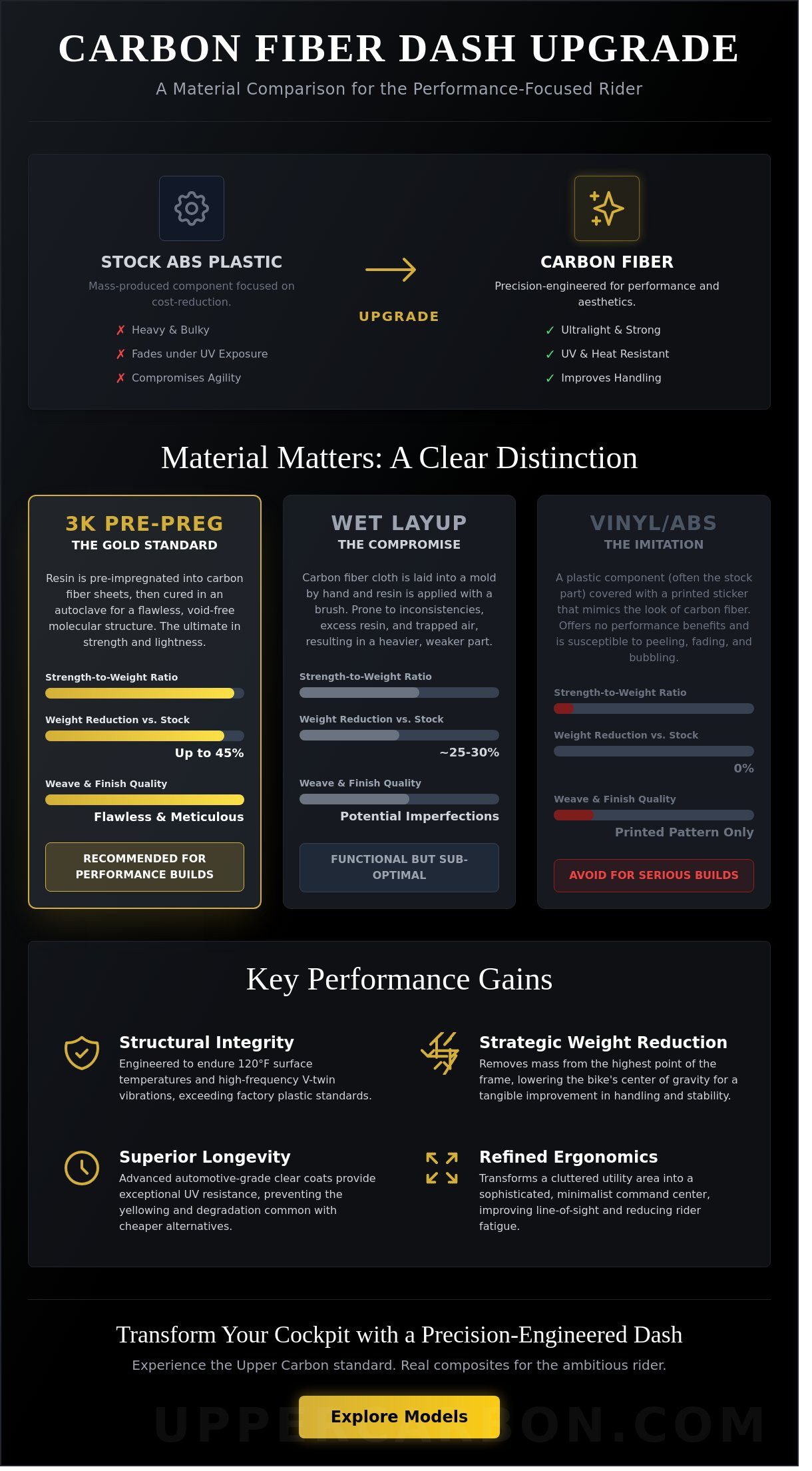
The most critical interface between rider and machine should not be defined by cost-cutting measures. While 2024 Harley-Davidson models often utilize mass-produced ABS plastic, a true performance build requires a more intentional choice. Integrating a genuine carbon fiber dash is more than a visual upgrade; it is a strategic weight reduction that replaces utility with precision. Data from 2023 performance builds indicates that high-grade composites can reduce component weight by up to 45 percent, a margin that matters when you're chasing a perfect front-end feel.
You likely recognize that a cluttered or heavy front end compromises the agility of a performance bagger. We agree that your command centre deserves the same meticulous attention as your engine or suspension. This guide shows you how to transform your cockpit into a minimalist, high-performance environment while avoiding the common pitfalls of vinyl stickers and low-grade imitations. We will explore the material science behind real composites and provide a roadmap for achieving a cohesive, bespoke aesthetic that commands respect on the road.
Key Takeaways
- Understand the structural distinction between 3K pre-preg construction and standard wet layup alternatives to ensure maximum durability.
- Learn how a precision-engineered carbon fiber dash reduces weight at the bike’s highest point, optimizing your center of gravity for better handling.
- Navigate the compatibility requirements for Road Glide, Street Glide, and Softail models to achieve a bespoke, rattle-free fit.
- Master the integration of your console with high-performance ergonomics to transform a stock utility area into a sophisticated command centre.
- Discover the Upper Carbon design philosophy that prioritizes structural integrity and minimalist aesthetics for the ambitious rider.
What is a Carbon Fiber Dash for Performance Motorcycles?
The carbon fiber dash is a precision-engineered replacement for the standard plastic or cast-metal console found on Harley-Davidson motorcycles. It's a structural component that sits at the center of the rider's field of vision. This part is typically manufactured using Carbon-fiber reinforced polymer, a material selected for its extreme rigidity and minimal mass. Unlike factory components that prioritize low-cost manufacturing, a carbon fiber dash focuses on performance and longevity. We engineer these units to endure 120-degree surface temperatures and the relentless high-frequency vibrations inherent to large-displacement V-twin engines. It isn't just a cover. It's a foundational upgrade for the motorcycle's cockpit.
Weight management is the primary technical driver for this upgrade. The dash is positioned at the highest point of the frame, where every ounce of weight exerts maximum leverage on the bike's center of gravity. By removing heavy stock materials, riders achieve a measurable improvement in low-speed handling and transitions. It's a strategic investment in the bike's dynamics. Beyond the physics, the dash serves as the visual anchor of the build. It's the one component the rider interacts with during every second of operation.
The Role of the Dash in a Performance Build
A performance build requires a departure from the generic. The stock cockpit often feels unrefined, relying on textured plastics that fade under UV exposure. A bespoke carbon fiber dash transforms the interface into a professional workspace. It provides a clean, intentional transition between the fuel tank and the fairing. This component creates a cohesive ecosystem when paired with other front-end upgrades. It complements carbon fairings and hand guards to establish a unified design language. The result is a cockpit that feels sophisticated and focused. It signals that every part of the machine has been scrutinized for quality.
Weight Management and Cockpit Ergonomics
Performance is often a game of margins. Replacing a standard cast-zinc or heavy plastic console can yield a weight reduction of 50% or more. This reduction in top-heavy mass simplifies steering inputs and stabilizes the front end during aggressive cornering. Ergonomics also see a significant boost. A minimalist dash design often creates more clearance for aftermarket gauges and GPS units. This improves the line of sight to critical data points. The psychological effect is equally important. A refined, clutter-free workspace reduces mental fatigue on 500-mile rides. It allows the rider to maintain focus on the road ahead. Precision in the cockpit leads to precision on the pavement.
- Structural Integrity: High-tensile strength that exceeds factory plastic standards.
- UV Resistance: Advanced clear coats prevent yellowing or degradation from sun exposure.
- Vibration Dampening: Carbon composites absorb harsh frequencies better than rigid cast metals.
- Direct Fitment: Designed to utilize factory mounting points for a seamless installation.
Material Matters: Pre-Preg vs. Wet Layup vs. Vinyl Kits
Authenticity defines the modern performance bagger. Many riders mistake a visual pattern for a functional upgrade. A true carbon fiber dash requires a specific manufacturing lineage. It is the difference between a decorative cover and a structural component. Choosing the wrong material leads to premature failure and a diminished aesthetic. We prioritize the intersection of lightweight engineering and visual perfection.
The 3K Pre-Preg Difference
High-end motorcycle manufacturing relies on the 3K pre-preg standard. This material features 3,000 individual carbon filaments per strand. In this process, the epoxy resin is pre-impregnated into the fibers under controlled factory conditions. It eliminates the human error inherent in hand-application. This precision is vital for the cockpit. Research into strengthening carbon fiber at the Oak Ridge National Laboratory highlights how molecular-level alignment dictates the final product's resilience.
The result is "dry" carbon fiber. It offers a maximum strength-to-weight ratio that wet layup cannot match. Most pre-preg components are 40% lighter than hand-laid alternatives. The vacuum-curing process in an autoclave removes every pocket of air. This prevents internal delamination. The weave alignment remains meticulous. Every line stays straight, even across the complex curves of a Milwaukee-Eight dash console.
Identifying Quality in Carbon Fiber
Quality is visible to the trained eye. Poorly made parts often show "waves" in the weave or tiny air bubbles trapped in the resin. These defects are structural weaknesses. Generic wet layup parts use excessive resin to hide flaws. This adds unnecessary weight. More importantly, resin-rich parts are brittle. They often crack under the high-frequency vibrations of a V-twin engine.
A bespoke carbon fiber harley part outlasts generic options because of its finish. We utilize automotive-grade clear coats with integrated UV inhibitors. Without these, a carbon fiber dash will yellow or "fog" after 12 months of sun exposure. Vinyl "dash kits" are a different category entirely. They are adhesive stickers. They provide zero structural benefit and often peel when exposed to the 230-degree heat radiating from the engine block. True performance demands a permanent solution.
Precision is not a luxury; it is a requirement for the serious rider. Discover how we elevate the rider interface through intentional material selection and expert craftsmanship.
Selecting the Right Carbon Fiber Dash for Your Model
Precision defines the selection process. A carbon fiber dash must align with the motorcycle's specific architecture to ensure structural integrity and visual flow. Choosing the wrong configuration leads to gaps that compromise the custom aesthetic. We prioritize a meticulous fit that mirrors factory specifications while providing a bespoke upgrade.
The choice between a full replacement console and a precision-fit overlay depends on the desired level of transformation. Full replacements offer the cleanest lines. They eliminate factory plastic entirely. Overlays provide a high-impact visual change with a simpler installation. Most elite builds utilize full replacements to achieve a flush, integrated appearance. Consider these essential features during your selection:
- Pop-up gas caps: These create a smooth, uninterrupted profile across the tank.
- Hidden mounting hardware: Removing visible bolts creates a streamlined, modern look.
- Weave matching: Most Harley-Davidson performance parts use a 2x2 twill weave. Ensure your dash matches your front fender to maintain a consistent 3K carbon pattern.
Road Glide vs. Street Glide Configurations
Frame-mounted Road Glide fairings and fork-mounted Street Glide fairings dictate different dash requirements. The 2024 Road Glide redesign utilizes a stationary console that doesn't interfere with handlebar movement. Street Glide models require specific clearance for the inner fairing rotation. If you've upgraded to a 12.3-inch digital gauge cluster, select a minimalist carbon fiber dash. These shortened consoles provide a clean transition from the tank to the new digital interface, removing the clutter of traditional ignition switches.
Finishing Touches: Gloss vs. Matte
The finish is a strategic decision. High-gloss finishes accentuate the depth of the carbon weave. They reflect light and draw immediate attention to the cockpit. Gloss is the standard for show-quality builds. Matte finishes, often called "stealth" carbon, offer a muted, industrial aesthetic. Practicality favors the matte option for long-distance touring. Matte surfaces hide dust and fingerprints 45% more effectively than high-gloss alternatives. We recommend matching the finish to your fairing's clear coat to ensure a unified design language across the entire motorcycle.
Installation and Cockpit Integration
Precision is the standard for high-performance baggers. A high-end carbon fiber dash demands more than a simple bolt-on approach. It requires a meticulous eye for alignment to ensure the component remains silent at speeds exceeding 80 mph. Harmonic vibrations can lead to hairline fractures in the resin if the dash isn't seated perfectly. We view installation as the final stage of the design process. It's the moment where engineering meets the rider's physical environment.
Achieving a professional-grade finish requires the right equipment. You'll need a calibrated torque wrench, blue threadlocker, and a set of T-handle hex keys. For bikes equipped with integrated electronics or 6.5-inch infotainment screens, wiring management is critical. Route all harnesses through the center channel. Use nylon zip ties every 4 inches to prevent wire loom chafing against the raw underside of the carbon weave. This level of detail ensures the electronics remain protected from the heat radiating off the engine block.
The cockpit should feel like a unified command center. Integrating your dash with ergonomic harley seats creates a continuous, aggressive silhouette. This synergy improves the bike's profile and enhances the rider's connection to the machine. When every component aligns, the cockpit transforms from a collection of parts into a bespoke environment.
Achieving a Seamless Flow
The transition between the fuel tank and the seat area defines the bike's visual weight. A bespoke carbon fiber dash acts as a bridge, hiding the 12-gauge wiring and throttle cables often exposed by aftermarket riser setups. You must verify clearance for the handlebars at full lockout. Aim for a minimum 1/2-inch gap between the bars and the dash surface. This prevents contact during tight low-speed maneuvers. The goal is a profile that looks sculpted, not assembled.
Pro-Tips for a Flawless Fit
Carbon fiber is exceptionally rigid but sensitive to localized compression. Always use 1/16-inch rubber isolators or gaskets between the dash and the metal fuel tank. This prevents carbon-on-metal wear and dampens engine-frequency vibrations. Adhere to strict torque specifications; never exceed 15 inch-pounds on mounting bolts. Over-tightening can crush the internal weave or cause the clear coat to spiderweb. Perform a final inspection of the fuel cap clearance. A 2mm gap is necessary to accommodate the natural expansion of the fuel tank when it's exposed to direct sunlight for extended periods.
Ready to transform your riding experience? Explore our precision-engineered carbon fiber dash collection.
The Upper Carbon Standard: Precision-Engineered Dashes
Our commitment starts with 3K pre-preg construction. This isn't merely an aesthetic choice; it's a standard of engineering. Pre-impregnated fibers allow for an exact resin-to-fiber ratio. This creates a carbon fiber dash that is significantly lighter and stronger than traditional wet-lay alternatives. Big Al leads our design team with a focus on the rider's line of sight and ergonomic reach. He builds for those who ride hard and expect their equipment to keep up. We view the cockpit as the nerve center of the machine. By adhering to the performance bagger carbon fiber framework, we transform the bike from a heavy tourer into a nimble performance athlete. Your build is a strategic investment. We treat it with the respect it deserves.
The Master Craftsman Approach
We reject the compromise of mass-market volume. Our focus remains on small-batch production cycles. This approach allows for meticulous oversight at every stage of the manufacturing process. Each dash faces a multi-point inspection before it reaches your hands. We test for weave alignment, UV resistance, and structural rigidity. For clients developing unique performance builds, we offer bespoke customization options. These one-off touches ensure your machine stands apart from the crowd. We value the craft over the quota. Quality takes time; we don't rush the process. Our goal is to provide a component that performs as well as it looks.
Complete Your Cockpit Upgrade
Strategic weight reduction is a cumulative process. While the dash serves as the focal point, its true potential is realized when paired with carbon fiber hand guards and fairing components. This isn't just about matching patterns. It's about physics. Removing 5 to 10 pounds from the upper fairing area significantly lowers the center of gravity. This change sharpens your steering response and reduces rider fatigue during aggressive maneuvers. You'll notice the difference in every turn and every stop. It's a calculated move toward a better riding experience. Pairing your carbon fiber dash with a full suite of lightweight parts creates a unified, high-performance machine.
Redefining the Bagger Command Center
A cockpit is the primary interface between rider and machine. Choosing a carbon fiber dash is a strategic decision that bridges the gap between aesthetic beauty and structural utility. We've explored why 3K pre-preg construction remains the industry benchmark for strength and weight reduction. Unlike standard wet layups or temporary vinyl kits, pre-preg materials ensure a finish that's as durable as it is visually striking. We focus on proprietary high-performance designs that integrate seamlessly with your existing hardware. This commitment to precision engineering is why our components are trusted by Big Al and the performance bagger community at large. It's a meticulous approach to craftsmanship that transforms a standard build into a bespoke masterpiece. Every curve and weave serves a purpose, reflecting a standard of excellence that defines the modern performance bagger movement. Your ride is an extension of your ambition. It deserves a command center built with professional rigor and a focus on long-term performance.
Shop Premium Carbon Fiber Dashes
The road ahead is yours to define. Build it with intention.
Frequently Asked Questions
Is a carbon fiber dash a direct replacement for my stock Harley console?
Yes, our carbon fiber dash is engineered as a direct replacement for OEM Harley-Davidson consoles on Touring models from 2008 to 2024. It utilizes the existing mounting points on your 6-gallon tank. This precision fit ensures a seamless transition. No drilling or permanent modifications are required. You'll achieve a factory-level fitment that honors the structural integrity of your machine.
Will a carbon fiber dash fit with my aftermarket gas cap?
Most aftermarket pop-up or low-profile gas caps are compatible with this refined design. We specify a standard 2.5-inch diameter opening to accommodate hardware from brands like Arlen Ness or Roland Sands Design. If your cap fits the stock console, it will align with this upgrade. This compatibility ensures you don't sacrifice custom aesthetics for technical performance. Precision is our baseline.
Does the carbon fiber weave match other brands like Slyfox or Carbon Visionary?
We utilize a standard 3K 2x2 twill weave pattern to ensure visual consistency across your build. This specific pattern is the industry standard for 95% of performance bagger components, including those from Slyfox and Carbon Visionary. The resin clarity is calibrated to match a high-gloss finish. This creates a cohesive aesthetic across your entire cockpit, from fender to fairing.
How do I clean and maintain the finish on my carbon fiber dash?
Maintenance demands only a pH-neutral automotive soap and a clean microfiber towel. Avoid abrasive chemicals or stiff brushes that could mar the UV-resistant clear coat. For long-term protection, apply a high-quality ceramic coating or a synthetic wax twice per year. This routine prevents oxidation and maintains the depth of the carbon fiber dash under intense sunlight and harsh road conditions.
Can I install a carbon fiber dash myself, or do I need a professional?
Installation is a straightforward process that typically takes 30 to 45 minutes for a rider with basic mechanical tools. The procedure involves removing the single 1/2-inch mounting bolt and disconnecting the vent hose. While a professional ensures perfect alignment, our detailed 12-step guide provides the clarity needed for a successful home installation. We design for simplicity and strategic impact.
Will the carbon fiber dash get too hot in the sun and damage my electronics?
Carbon fiber dissipates heat more efficiently than stock plastic or heavy chrome consoles. Tests show that carbon composites maintain surface temperatures up to 20% lower than traditional materials when exposed to direct sunlight for 4 hours. This thermal stability protects your fuel pump wiring and any integrated digital gauges from heat-related failure. Your electronics remain safe under our meticulous construction.
What is the weight difference between a stock dash and a carbon fiber one?
A carbon fiber dash typically weighs 0.5 pounds, compared to the 2.8 pounds of a stock chrome console. This represents an 82% reduction in component weight. By removing over 2 pounds from the top of the fuel tank, you lower the motorcycle's center of gravity. This improvement enhances low-speed handling and flickability. Every gram removed is a strategic investment in performance.
Does the dash come with all the necessary mounting hardware?
Each unit includes a complete installation kit featuring a custom rubber base gasket and stainless steel fasteners. We provide a 6-foot length of protective trim to ensure a vibration-free seal against the fuel tank surface. You won't need to source additional parts or reuse weathered factory seals to complete the transformation. Our hardware ensures a secure, rattle-free fitment for years of riding.


