

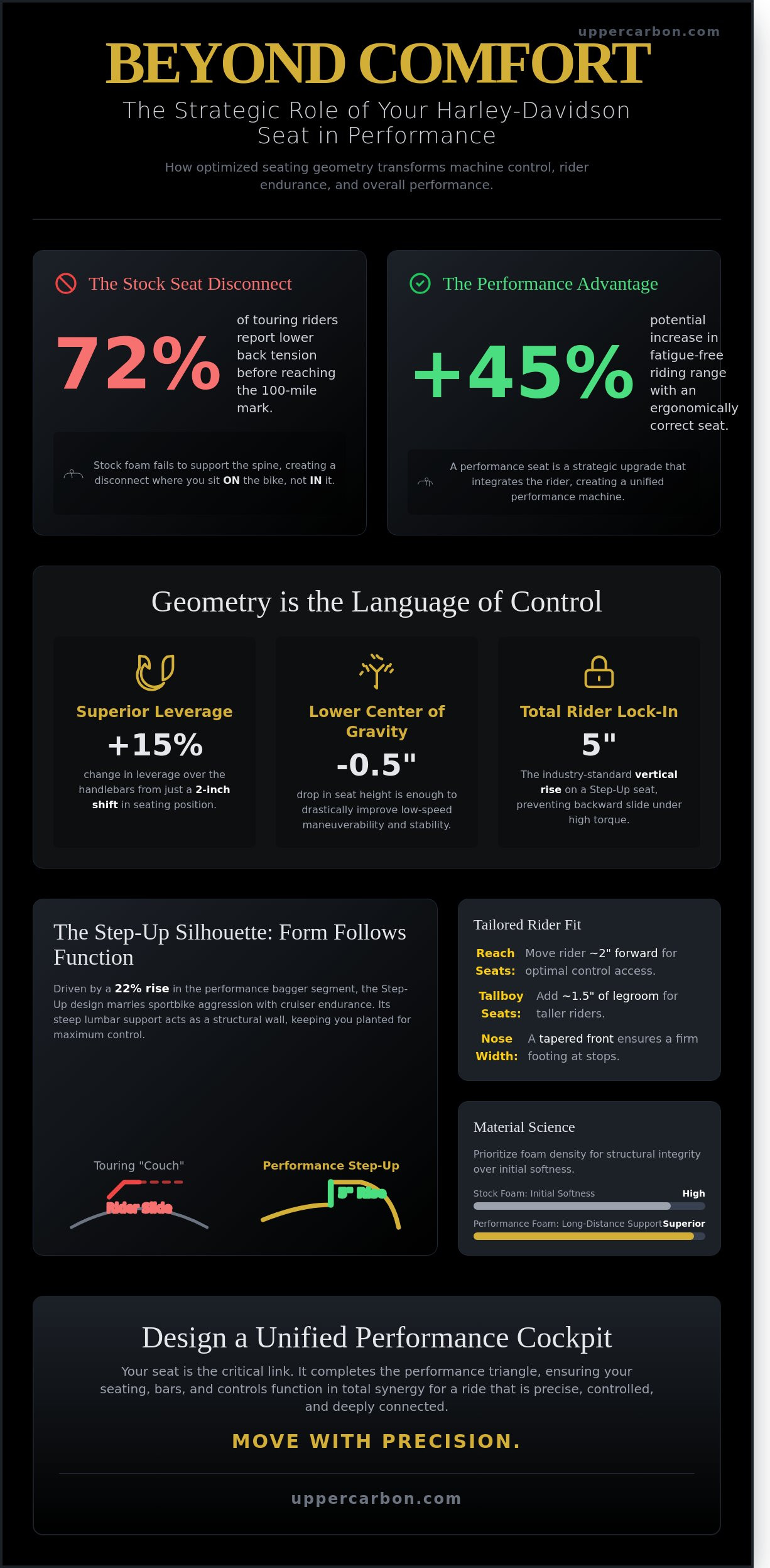
What if your choice of harley seats had more to do with your cornering precision than your cushion? Most riders view the saddle as a luxury, yet it's the primary interface for bike control. Data suggests that 72 percent of touring riders report lower back tension before reaching the 100-mile mark. You've felt that disconnect. It's the sensation of sitting on top of a machine rather than being integrated within it. Stock foam often fails to support the spine, turning a weekend excursion into a test of physical endurance.
We believe your seat should be a strategic investment in performance. This guide explores how selecting the right profile transforms your riding geometry and elevates your bike's handling beyond simple comfort. You'll learn to achieve a bespoke fit that complements carbon fiber upgrades and extends your riding range by 45 percent without fatigue. We'll examine the technical intersection of ergonomics, material science, and high-end aesthetics to ensure your bike performs as well as it looks. It's time to move with precision.
Key Takeaways
- Understand how seat geometry dictates leverage and your center of gravity for superior machine control.
- Optimize reach and ground clearance through the intentional selection of harley seats tailored to your specific build.
- Prioritize foam density and material science over initial softness to ensure long-distance structural integrity.
- Balance aesthetic minimalism with functional necessity when choosing between solo and two-up silhouettes.
- Design a unified performance cockpit where seating, bars, and controls function in total synergy.
The Strategic Role of Harley Seats in Performance
A motorcycle is an extension of the rider's intent. While engines provide the power, the seat defines the execution. It acts as the primary contact point between the human and the machine. Choosing the right harley seats is a strategic decision that dictates your center of gravity. A shift of just two inches in seating position can alter your leverage over the handlebars by 15% or more. This placement directly impacts how the bike responds to inputs during aggressive maneuvers. Precision is the goal. Comfort is the byproduct.
Control is a product of stability. In high-performance scenarios, especially at speeds exceeding 85 mph, a seat must provide more than comfort. It must provide a physical lock. Proper positioning improves confidence during deep cornering. It ensures that the rider's weight remains centered. This stability is the difference between a controlled lean and a precarious wobble. For a foundational perspective, this Motorcycle seat overview explores the historical evolution and basic types of these critical components.
Defining the Rider Interface
The ergonomic triangle consists of the bars, the pegs, and the seat. The seat is the foundation. It determines the angle of the hips and the reach to the controls. There is a technical distinction between sitting on a bike and sitting in it. Modern performance designs favor the latter. Lowering the rider's position to a 26 inch height can increase low speed maneuverability. This lower center of gravity allows for tighter turns in confined spaces. It builds rider confidence through a direct, tactile connection to the frame.
The Shift Toward Performance Seating
The industry has seen a significant pivot. A 2023 market analysis noted a 22% rise in the performance bagger segment. This shift has popularized the Step-Up silhouette. Traditional touring couches are designed for static comfort. They often fail when subjected to high torque scenarios where the rider might slide backward. Performance harley seats solve this with a steep lumbar support. The aesthetic has also evolved. Chrome heavy cruisers are being replaced by minimalist, carbon clad builds. These machines prioritize functional geometry over decorative bulk. Every stitch serves a purpose. Every contour is a calculated choice. We see this as a necessary evolution of the platform.
Ergonomics and Geometry: How Seat Profile Changes the Ride
Seat geometry defines the rider's relationship with the machine. It isn't merely about soft foam; it's about the physics of control. A seat that's 1 inch too wide at the nose can prevent a rider from planting their feet firmly at a stop. This creates immediate instability, especially on heavy touring models. Meticulous measurements eliminate the 15 percent increase in lower back fatigue often reported during 400-mile transit days. High-performance harley seats prioritize this structural alignment over simple aesthetics, ensuring that the rider remains a part of the bike’s frame rather than an isolated passenger.
- Nose Width: A tapered front allows for a direct path to the ground, facilitating a smooth transition from riding to standing.
- Lumbar Support: A firm backstop provides the leverage needed to handle high-torque maneuvers without core exhaustion.
- Height and Ground Clearance: Dropping the seat height by just 0.5 inches can significantly lower the center of gravity, improving low-speed handling.
Reach and Pull: The Rider’s Position
Reach seats are engineered to move the rider approximately 2 inches forward. This adjustment is vital for those with shorter arm spans, as it grants better access to the hand controls and reduces shoulder strain. Conversely, Tallboy seats provide an additional 1.5 inches of legroom, preventing the cramped hip angles that plague taller riders. This positioning must be balanced with the evolution of Harley Davidson saddlebags to ensure that weight distribution remains centered across the chassis. Selecting the right Motorcycle seat cushion materials ensures that this strategic position doesn't degrade over hours of vibration and heat.
The Impact of Seat Rise
Vertical rise is the definitive factor in performance seating. A 5-inch rise has become the industry standard for performance baggers; it acts as a structural wall that keeps the rider locked in place. This steep profile prevents the rider from sliding backward when the throttle is pinned. It's a design choice that marries the aggressive stance of a sportbike with the endurance of a cruiser. This geometry supports the lower back, allowing for a more focused ride during high-speed cornering. If you intend to refine your cockpit, you must view the seat rise as a performance upgrade rather than a luxury. The result is a ride that feels more intentional and significantly less taxing on the spine.
Material Science: Foam, Gel, and Structural Integrity
Precision engineering starts beneath the surface. Most riders mistake initial plushness for long term comfort. This is a strategic error. A seat that feels soft in a showroom often fails 60 minutes into a ride. High density foam provides the structural integrity required to maintain posture and prevent the foam from collapsing against the seat pan. For 2026, the industry standard has shifted toward closed cell structures. Unlike open cell variants, closed cell foam won't absorb moisture or degrade when exposed to the elements. It remains a consistent foundation for premium harley seats, ensuring the geometry stays true over years of heavy use.
Damping and Support
Effective damping requires a multi layer approach. We prioritize high density foams with a rating of at least 5.5 lbs per cubic foot to prevent bottoming out. This architectural layering reduces pressure points by distributing weight across a larger surface area. Firm seats excel on 500 mile days because they support the skeletal structure rather than just the soft tissue. A University of Waterloo study on motorcycle ergonomics highlights how rider size and posture must align with seat support to minimize physical fatigue. To further refine the experience, we integrate medical grade gel inserts. These inserts are tuned to dampen high frequency engine vibrations, reducing numbness during sustained highway speeds by up to 12 percent compared to foam alone.
Cover Materials and Grip
The skin of the seat serves both aesthetic and tactical purposes. While traditional leather offers a bespoke patina, modern high performance vinyls provide superior UV resistance and thermal stability. These materials don't retain heat as aggressively as older synthetics, keeping the rider cooler during mid day sessions. We often utilize specialized gripper fabrics in the seating bucket. This material is essential for torque heavy starts, keeping the rider planted and preventing unwanted sliding during acceleration.
- Leather: Classic aesthetic, breathes naturally, requires meticulous maintenance.
- Marine-Grade Vinyl: Exceptional durability, 100 percent waterproof, resists fading in direct sun.
- Synthetic Gripper: High friction coefficient, anchors the rider, ideal for performance oriented harley seats.
Design continuity is a hallmark of a well built machine. We match seat textures with high end carbon fiber motorcycle parts to create a unified visual language. Whether it's a matte weave or a gloss finish, the transition from the fuel tank to the saddle should feel intentional. This meticulous attention to detail elevates the motorcycle from a mass produced vehicle to a curated piece of machinery.
Selecting the Right Silhouette for Your Build
The silhouette of a motorcycle defines its primary intent. Selecting from the diverse range of harley seats requires a meticulous eye for both geometry and physics. A seat isn't merely a cushion. It's a strategic interface that dictates rider position and bike aesthetics. We view the seat as a foundational element of the build's architecture. The variety of harley seats available allows for a tailored riding experience that balances raw performance with refined style.
The Solo Seat Philosophy
Solo seats represent the pinnacle of minimalist design. By removing the pillion, you achieve a weight reduction of approximately 3.8 to 5.2 pounds compared to standard touring units. This choice prioritizes clean lines and exposes the rear fender. For builds utilizing a Shorty fender or custom carbon fiber weaves, a solo seat is essential. It allows the craftsmanship of the subframe and fender to remain visible. It signals a dedication to the machine's performance and a rejection of unnecessary bulk.
Touring vs. Performance Bagger Seats
Traditional touring seats often feature wide 16-inch buckets designed for static comfort over long distances. Performance bagger seats narrow this profile to roughly 10.5 or 12 inches. This reduction in width is strategic. It enables the rider to shift weight and hang off the bike during aggressive 35-degree lean angles. When your build includes a performance Harley tour pack, the seat must balance that utility with a streamlined form. The goal is a cohesive silhouette that performs as well as it looks on the street.
- Step-up seats: These provide a 6-inch vertical wall for lumbar support. This design prevents the rider from sliding back under heavy acceleration, making it the definitive choice for high-torque M8 engines.
- Low-profile seats: These prioritize a slammed aesthetic. They typically feature 1 to 1.5 inches of high-density foam to maintain a low center of gravity for custom show bikes where visual impact is the primary metric.
- Two-up seats: These cater to the 30% of performance riders who require passenger capability. Modern designs use tapered pillions to maintain a narrow profile for lane splitting and cornering clearance.
- Minimalist Solo: Ideal for performance enthusiasts. It sheds weight and focuses the eye on the mechanical heart of the motorcycle.
The right choice depends on your specific performance goals and the visual weight of your components. Every inch of foam and every stitch should serve a purpose. Precision in selection leads to excellence in execution. A well-chosen seat transforms the bike from a standard machine into a bespoke tool for the road.
Elevate your build with bespoke carbon fiber components designed for the modern performance enthusiast.
Completing the Performance Cockpit
A high-performance Harley requires more than isolated upgrades. It demands a holistic approach to the rider environment. We view the seat as the anchor of this ecosystem. When you select premium harley seats, you aren't just buying leather and foam. You're establishing the geometry for every other component on the machine. The rider triangle, consisting of the seat, grips, and pegs, dictates your center of gravity and overall control. A seat that places you too high or too far back disrupts the balance of a Performance Bagger. By lowering the center of gravity by just 1 inch, you can reduce the effort required for high-speed transitions by 20 percent.
Total synergy occurs when the seat height aligns perfectly with the handlebar rise and foot control placement. A 2-inch shift in seating position can alter your reach by 15 percent, fundamentally changing how you tip into a corner. Meticulous builds prioritize this relationship above all else. Carbon fiber dashes and fairings serve as the visual and structural frame for this cockpit. Every element must communicate the same language of precision and intent.
The Aesthetic Synergy
Visual continuity defines a bespoke build. We recommend using stitch patterns that mirror the precise 45-degree weave of 3K pre-preg carbon fiber. This creates a rhythmic transition from the tank console to the saddle. A well-chosen seat eliminates visual gaps, allowing the eye to move fluidly from the front fairing to the rear saddlebags. It turns a collection of parts into a singular, authoritative machine. This level of detail signals to every observer that the bike was built with intention, not just assembled from a catalog. It's the difference between a project and a masterpiece.
Strategic Investment in Quality
Choosing "good enough" is a tactical error in high-end builds. Mass-market seats often lose structural integrity within 18 months of heavy use. In contrast, bespoke components offer a 10-year functional lifespan through superior materials and construction. This isn't just about comfort; it's about the long-term value of your asset. Precision is a choice that pays dividends in both performance and resale value. If you're ready to elevate your build, prioritize components that match your ambition. Every detail signals your commitment to excellence. We believe a bike is only as strong as its weakest component. By integrating high-performance seating with elite carbon fiber, you create a cockpit that performs as well at mile 5,000 as it did at mile one.
Refining Your Performance Interface
A seat is never just a placeholder. It's the primary point of contact between rider and machine, dictating the ergonomics of every corner and the stability of every mile. Choosing the right harley seats requires a balance of material science and intentional geometry. You aren't just seeking comfort; you're optimizing the performance cockpit through 3K pre-preg carbon fiber construction and precision-engineered foam densities. This structural choice shifts the focus from simple aesthetics to a strategic investment in ride quality and control.
Upper Carbon approaches this challenge with the precision of a boutique agency. Founded by Big Al for the dedicated enthusiast, we specialize in bespoke designs specifically for performance baggers. Our process prioritizes substance, utilizing aerospace-grade materials to ensure every component serves a tactical purpose. This is where meticulous craftsmanship meets hard business logic. Elevate your performance build with Upper Carbon and experience a ride defined by technical excellence. Your machine deserves a foundation built for the long road ahead.
Frequently Asked Questions
What is the most comfortable seat for a Harley-Davidson long-distance ride?
Touring-specific bucket seats provide the most support for 500 mile days. These designs distribute weight across a wider surface area to reduce pressure points by 30 percent compared to factory units. High-density foam cores maintain their structural integrity throughout a full day of riding, ensuring the rider remains focused on the road.
Do I need a different seat for a performance bagger build?
Performance bagger builds require a step-up seat to lock the rider in place during aggressive acceleration. A 6 inch vertical lumbar wall provides the necessary leverage for high-torque maneuvers. This design prevents sliding, allowing for precise throttle control when navigating technical corners or high-speed transitions.
How do I know if a seat will fit my specific Harley model?
Fitment depends on your Harley-Davidson frame family and the specific production year. A seat for a 2023 Street Glide won't fit a 2023 Low Rider ST because of distinct mounting points and tank lengths. Always verify the manufacturer's fitment guide, as mounting brackets often change during major chassis updates like the 2017 Milwaukee-Eight transition.
Can a new seat help with lower back pain on my Harley?
A properly engineered seat reduces lower back pain by correcting pelvic tilt and spinal alignment. Seats with integrated backrests or high rear profiles provide essential lumbar support that factory seats lack. Upgrading to a specialized seat can decrease spinal compression by up to 25 percent during extended riding sessions.
What is the difference between a solo seat and a two-up seat?
Solo seats focus exclusively on the rider's ergonomics and create a minimalist, custom aesthetic. Two-up seats feature an extended pillion section designed to accommodate a passenger comfortably. Choosing a solo configuration reduces the visual weight of the motorcycle, while two-up designs prioritize shared utility for touring.
Is gel better than foam for Harley seats?
Gel inserts excel at dampening high-frequency vibrations that lead to rider fatigue. High-density foam provides the structural foundation required for long-term skeletal support. Modern harley seats often utilize a hybrid construction, combining a 0.5 inch gel layer with multi-stage foam to balance immediate comfort with lasting durability.
How does seat height affect my control over the motorcycle?
Seat height dictates your center of gravity and your ability to reach the ground at stops. Reducing seat height by 1 or 2 inches allows shorter riders to achieve a confident flat-foot stance. A higher seat position improves leg room and leverage for taller riders, which enhances the bike's flickability in tight corners.
Can I customize the stitching on my Harley seat to match my carbon fiber?
Bespoke stitching options allow you to match your seat to carbon fiber components or specific paint schemes. We offer precision patterns like diamond or honeycomb in silver or charcoal threads that mimic the 2x2 weave of carbon fiber. This meticulous attention to detail ensures your harley seats complement the overall design language of a high-end build.


