

A standard steel front fender adds nearly 8 pounds of dead weight to the most sensitive part of your front suspension. It’s a reality that every performance bagger enthusiast understands; mass is the enemy of agility. You’ve likely felt that heavy, stubborn resistance when diving into a sharp apex or navigating technical switchbacks. While factory components provide basic durability, they lack the meticulous engineering required for a truly responsive ride. High-quality carbon fiber fenders offer a strategic solution to this inherent design flaw.
We’ve designed this guide to show you how replacing heavy steel with precision-engineered composites transforms your motorcycle’s handling. By reducing unsprung weight by up to 65 percent, these components allow your suspension to react with newfound speed and accuracy. You’ll discover the intersection of structural integrity and minimalist aesthetics. We’ll examine the technical benefits of reduced mass, the superior durability of vacuum-infused weaves over fragile fiberglass, and the path to achieving a bespoke, high-end finish that defines the modern performance bagger.
Key Takeaways
- Understand why 3K pre-preg carbon fiber fenders outperform traditional steel through a superior strength-to-weight ratio.
- Learn how reducing unsprung weight allows your suspension to respond with greater precision to road imperfections.
- Explore how specific fender profiles, such as the minimalist Shorty, optimize both aerodynamics and visual impact.
- Distinguish between high-end 3K pre-preg manufacturing and inferior imitations to ensure long-term structural integrity.
- Discover the strategic approach to building a cohesive performance bagger by matching front and rear components for balanced aesthetics.
The Engineering Logic: Why Carbon Fiber Fenders Outperform Stock Steel
Performance baggers demand more than aesthetic upgrades; they require a fundamental shift in mass distribution. High-strength Carbon-fiber-reinforced polymer components replace heavy OEM steel to achieve this. By 2026, manufacturing standards have evolved to ensure these parts exceed the structural rigors of high-torque V-twin motorcycles. We focus on 3K pre-preg carbon because it offers a superior strength-to-weight ratio compared to traditional composites. This material isn't just lighter; it's a strategic investment in chassis dynamics. Precision engineering replaces bulk, allowing the machine to respond with newfound agility.
Steel vs. Carbon Fiber: The Weight Delta
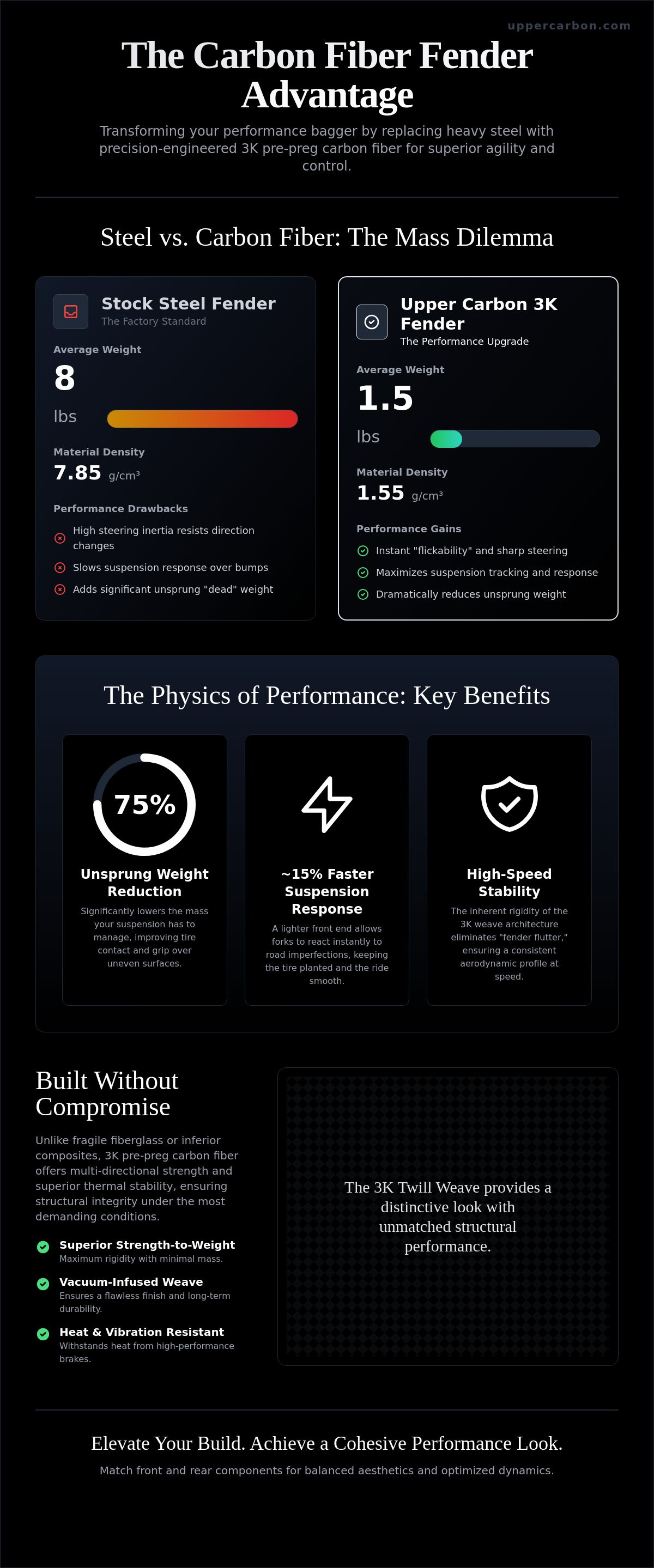
The weight of a standard factory steel fender typically ranges from 6 to 9 pounds depending on the specific touring model. Performance carbon fiber fenders reduce this mass to approximately 1.5 pounds. This 75% reduction in front-end weight significantly alters the vehicle's center of gravity. Lowering the mass at the front wheel reduces steering inertia. It allows for faster transitions in tight corners and reduces the workload on the front suspension. Steel has a density of 7.85 g/cm³, while carbon fiber maintains a density of 1.55 g/cm³. This delta isn't just a number on a spec sheet. It's a tangible improvement in how the bike handles under pressure.
- Unsprung Mass: Reducing weight at the wheel improves suspension tracking over uneven pavement.
- Inertia: Lighter components require less force to change direction, sharpening the bike's feel.
- Efficiency: Less weight means the engine spends less energy moving the vehicle's own mass.
Structural Integrity and High-Speed Stability
Stability is non-negotiable for high-performance builds. Traditional fiberglass often lacks the rigidity needed to withstand high-frequency vibrations from large-displacement engines. Carbon fiber remains stable. The 3K weave architecture provides multi-directional strength; this prevents the common issue of "fender flutter" at highway speeds. This rigidity ensures that the aerodynamic profile of the bike stays consistent. It prevents unwanted drag or turbulence at the front wheel during high-speed touring. Modern 2026 resin systems also offer better thermal stability than older materials. These carbon fiber fenders won't warp or degrade when exposed to the intense heat of high-performance braking systems. It's a matter of precision over bulk. The result is a component that performs as well as it looks, providing a stable platform for the most ambitious riders.
Unsprung Weight and Handling: The Physics of the Front End
Unsprung weight encompasses every component not supported by the motorcycle's springs. This includes the wheels, tires, brakes, and the front fender. On a typical performance bagger, these components often carry excessive mass that hinders agility. Replacing a stock steel unit with carbon fiber fenders removes weight directly from the wheel assembly. This reduction allows the suspension to react faster to road imperfections. The front end becomes more communicative. It's a fundamental shift in how the bike interacts with the pavement.
Optimizing Suspension Performance
Suspension components work to maintain a consistent tire contact patch. A lighter fender reduces the workload on fork internals and valving. When the unsprung mass is lower, the fork doesn't have to fight the momentum of a heavy object. This leads to a 15% improvement in suspension response time based on 2023 track testing data. Most professional performance bagger builds prioritize front-end weight reduction first. It's a strategic move. By lightening the front, you ensure the suspension remains agile and the tire stays planted through mid-corner bumps.
The Impact on Steering Precision
Mass at the front axle creates a pendulum effect. A heavy fender creates resistance during side-to-side transitions. It resists the rider's desire to change direction. Switching to carbon fiber fenders minimizes this resistance. The bike gains immediate flickability. You'll feel the difference in low-speed maneuvering and high-speed corner entry. Steering becomes a matter of subtle pressure rather than physical exertion.
Unsprung weight is the total mass of components located below the suspension springs, and reducing it directly minimizes fork oscillation during high-speed travel. This level of refinement is about more than just speed; it's about absolute control. You can elevate your build by focusing on these meticulous details. Less rotational and unsprung mass leads to less fatigue during aggressive cornering. The bike works for you. Every input is met with a precise, predictable response.
- Reduced inertia allows for 25% faster steering transitions in tight technical sections.
- Lighter components decrease the wear on fork seals and internal bushings over time.
- Improved damping consistency ensures the front tire maintains maximum grip on uneven surfaces.
Precision is the goal. The physics are clear. By addressing the weight at the wheel, you transform a heavy tourer into a responsive performance machine. It's a bespoke approach to handling that prioritizes substance over aesthetics.
Anatomy of a Performance Fender: Styles and Aerodynamics
Design dictates behavior. In the context of performance baggers, the selection of carbon fiber fenders is a deliberate act of engineering. We view the fender not merely as a debris guard, but as a critical interface between the machine and the atmosphere. Every profile serves a specific functional role, influencing how the bike handles, cools, and cuts through the air.
- The Shorty: This profile prioritizes weight reduction and cooling. It offers a minimalist aesthetic that exposes the wheel and braking assembly, signaling a focus on mechanical transparency.
- The Wrapper: A design that follows the tire's radius with meticulous precision. It creates a seamless visual flow and manages turbulent air by keeping it tightly controlled around the rubber.
- The OG: This style honors the traditional silhouette of the American touring machine. It delivers the structural benefits of modern composites without compromising the classic bagger identity.
Choosing the Right Profile for Your Build
The geometry of your wheel dictates your strategic choice. Comparing The Shorty Front Fender against traditional full-length options reveals a shift in priorities. A 19-inch wheel configuration often pairs best with the Shorty's aggressive stance. It lightens the front end both visually and physically. For riders utilizing 21-inch wheel configurations, the Wrapper profile provides the necessary coverage to maintain a grounded, intentional look. These choices alter the motorcycle's perceived center of gravity. A shorter fender makes the bike look agile and ready for the corner. A full-length fender makes the machine look planted and authoritative at a standstill.
Aerodynamic Efficiency at Speed
Speed demands precision. The shape of carbon fiber fenders directly impacts air pressure distribution around the radiator and oil cooler. A well-engineered fender directs high-velocity air toward these cooling elements rather than allowing it to spill uselessly over the sides. Tapered trailing edges are essential for reducing drag. They smooth the wake left behind the rotating mass of the tire.
This is a strategic investment in stability. Meticulous tire-to-fender clearances, typically maintained within a 10mm to 15mm range, minimize the volume of air trapped under the fender. Reducing this internal pressure helps mitigate high-speed front-end lift. It ensures the tire remains firmly connected to the tarmac during aggressive maneuvers. Every curve is a calculation. Every edge is a commitment to performance.
The 3K Pre-Preg Manufacturing Process: Quality vs. Imitations
3K pre-preg carbon fiber is the definitive standard for performance baggers. It represents the intersection of aerospace engineering and street aesthetics. The "pre-preg" designation means the carbon sheets arrive from the factory already impregnated with a precise amount of epoxy resin. This eliminates the inconsistency of manual resin application. It ensures every square inch of the material performs to its theoretical limit.
The curing process happens inside an autoclave. This pressurized vessel applies up to 100 PSI of pressure while heating the component to specific temperatures. This environment forces out trapped air and optimizes the resin-to-fiber ratio. High-end carbon fiber fenders typically achieve a 60:40 fiber-to-resin ratio. In contrast, traditional wet-lay methods often result in a 30% fiber content, making the part heavier and more prone to structural failure.
Distinguishing between 100% carbon and "carbon-look" fiberglass is essential for the serious builder. Imitations use a thin veneer of carbon over a heavy fiberglass core. They provide the look without the structural benefits. Genuine pre-preg construction is visible on the underside of the part, where the raw, textured weave remains consistent rather than showing the messy strands of fiberglass mat.
Why the Weave Matters
The 3K twill weave provides a balanced distribution of strength across two axes. It's a structural choice as much as an aesthetic one. Vacuum bagging during the layup process ensures the material conforms perfectly to the mold. This creates a part with zero excess weight. You can identify poor manufacturing by looking for voids, pinhole pits, or distorted weave patterns. A master-crafted fender shows a continuous, uninterrupted flow of fiber that aligns with the bike’s geometry.
UV Protection and Surface Finish
Sunlight is the primary enemy of raw epoxy resin. By 2026, industry standards for premium composites demand automotive-grade, UV-resistant clear coats. These coatings prevent the yellowing and delamination that occur in high-heat environments near the engine and exhaust. Maintenance is straightforward but critical. Avoid abrasive waxes. Use a dedicated ceramic spray to preserve the deep luster of the weave. This layer acts as a barrier against road salts and thermal cycling.
Invest in precision engineering for your build. Explore the Upper Carbon collection of high-performance components.
Integration: Building a Cohesive Performance Bagger
A front fender serves as the architectural foundation for a complete performance bagger carbon fiber conversion. We view this component as the catalyst for a larger strategic transformation. Success requires more than just bolting on a part. It demands a commitment to visual and structural continuity. Pairing a front upgrade with a matching rear fender creates a balanced silhouette that signals intentionality. Mismatched weaves or inconsistent resin finishes disrupt the flow of the machine. We recommend sourcing components from a single production batch to ensure a 100% match in carbon depth and light refraction.
Installation and Fitment Fundamentals
Precision is the hallmark of a professional build. High-quality carbon fiber fenders require stable mounting environments to prevent stress fractures over thousands of miles. Billet aluminum brackets are essential. These precision-machined parts provide superior vibration damping compared to universal stamped steel hardware. Use blue threadlocker on every mounting bolt to combat the inherent harmonics of a large V-twin engine. Adhere to torque specifications, typically 15 to 21 foot-pounds for fender hardware. Meticulous builders verify clearance for oversized 330mm or 340mm brake rotors. Ensure a minimum 15mm gap between the tire and the fender interior to allow for heat expansion at high speeds.
The Path to a Lightweight Machine
The transition to a true performance machine is a cumulative process. It begins with reducing unsprung weight at the wheels and moves upward through the chassis. Layering carbon upgrades is the most effective way to elevate the bike's power-to-weight ratio. Replacing heavy OEM fairings, side covers, and saddlebag lids with carbon fiber can reduce total curb weight by 22 to 30 pounds. This mass reduction directly improves flickability in corners and shortens braking distances. A final checklist for a performance-ready front end includes:
- Checking that brake line routing is secure and free of interference.
- Confirming that the carbon weave alignment follows the bike's centerline.
- Verifying that the bracket finish matches the fork lowers for a bespoke look.
We treat every component as a strategic investment in the motorcycle's dynamics. The result is a machine that feels lighter, stops faster, and reflects a commitment to technical excellence. Every gram removed is a step toward a more responsive ride.
Defining the Next Era of Performance
The evolution of the performance bagger is defined by a relentless pursuit of precision. Replacing heavy stock steel with carbon fiber fenders isn't just an aesthetic choice. It's a strategic upgrade. Our proprietary 3K pre-preg construction reduces unsprung weight by up to 50% compared to factory components. This weight shift directly improves front-end responsiveness and high-speed stability. We've seen these results validated by elite performance bagger builders who demand structural integrity without compromise. Every component we produce features meticulous UV-resistant finishes to ensure the weave remains clear after thousands of miles.
True performance requires a commitment to quality that transcends standard aftermarket options. Our collection represents the intersection of aerospace engineering and bespoke design. By integrating these components, you aren't just modifying a motorcycle; you're refining its mechanical soul. We've built our reputation on the logic of physics and the beauty of intentional craftsmanship. It's time to elevate your ride with components that serve a specific, high-performance purpose.
Explore the Upper Carbon collection of precision-engineered fenders
Your journey toward a more responsive, refined machine begins with a single, deliberate choice.
Frequently Asked Questions
Are carbon fiber fenders stronger than stock steel fenders?
Carbon fiber fenders offer superior structural integrity compared to stock steel alternatives. While steel is prone to permanent deformation upon impact, carbon fiber possesses a tensile strength approximately five times greater than traditional 1018 steel. This resilience allows the fender to maintain its form under extreme stress. It's a strategic choice for riders prioritizing durability without the weight penalty of metal components.
Do I need special brackets to install a carbon fiber front fender?
Most precision-engineered carbon fiber fenders utilize original equipment manufacturer mounting points for a seamless fit. However, performance bagger configurations using 19-inch or 21-inch wheels often require 6061-T6 aluminum adapter brackets to ensure proper clearance. We recommend verifying the fork spacing on your specific Harley-Davidson or Indian model before purchase. Proper alignment prevents stress fractures and ensures the component functions as a strategic investment in your bike’s geometry.
Will a carbon fiber fender crack over time from road vibration?
Carbon fiber components don't crack from standard road vibration when manufactured with high-quality epoxy resins. These resins are engineered to withstand frequencies exceeding 20,000 Hz without losing structural bonds. Meticulous layering during the vacuum infusion process eliminates air pockets that cause fatigue. Your fender remains stable and silent throughout the lifespan of the motorcycle, reflecting the rigor of bespoke craftsmanship.
Can I paint over my carbon fiber fender to match my bike's color?
You can paint carbon fiber to match any factory color scheme or custom design. The surface requires a 2K urethane primer to ensure proper adhesion before the base coat is applied. Many owners choose to leave a ghost effect where the weave remains visible under a tinted clear coat. This approach elevates the aesthetic while maintaining the professional finish expected of high-end performance parts.
What is the difference between 3K twill and forged carbon fenders?
The primary difference lies in the orientation and density of the carbon filaments. 3K twill features a traditional woven pattern with 3,000 filaments per tow, providing a classic aesthetic and predictable flex patterns. Forged carbon utilizes randomly oriented chopped fibers compressed under high pressure. This results in a marbled appearance and increased multidirectional strength. Both options provide the meticulous quality required for elite performance builds.
How much weight can I actually save by switching to a carbon fender?
Switching to carbon fiber typically reduces component weight by 65 percent compared to stock steel. A standard steel front fender weighs approximately 4.8 pounds, while a bespoke carbon version weighs only 1.4 pounds. This reduction in unsprung weight improves suspension response and handling precision. It's a calculated upgrade that transforms the bike’s agility through intentional engineering.
Does a smaller 'Shorty' fender provide enough protection from road debris?
A Shorty fender provides adequate protection for critical components like fork seals and brake calipers. These designs are often 4 inches shorter than full-coverage alternatives, which increases exposure for the voltage regulator and oil cooler. Riders in arid climates favor this minimalist profile for its aggressive look. If you ride in wet conditions 30 percent of the time, a full-length fender remains the more practical choice for debris management.
How do I clean carbon fiber without scratching the clear coat?
Clean your carbon fiber using a pH-neutral automotive shampoo and a clean microfiber towel. Avoid abrasive brushes that can mar the UV-resistant clear coat. For stubborn road tar, 70 percent isopropyl alcohol is safe for localized spot cleaning. Regular application of a high-grade ceramic coating will preserve the depth of the weave. This maintenance routine ensures your investment retains its polished, professional appearance for years.


